

The jobs that fill our week
Rot starts as a water problem and only later becomes a carpentry one, and Ridgefield keeps wood wet for a good share of the year. Down in the river bottoms by Lake River and the refuge, low morning fog settles into the lowlands and clings to shaded north walls that never dry. Add roughly 44 to 45 inches of rain across a damp season that runs from fall into late spring, and the faces turned from the sun stay soaked. The homes we open up most are the pre-1930 places on the downtown bluff still wearing their original siding, and the low, floodplain-adjacent lots where ground damp wicks up into the framing. Fixing it for good means finding where the water gets in, cutting the rot back a good foot beyond where the wood still feels sound, and rebuilding whatever carries load before new siding goes up. It is the bulk of what we do.
Licensed and insured. WA Lic. #EVERGRS757MC
On anything sent before 5pm
We match or beat most written estimates
Remodels completed
Through a long Ridgefield wet season, moisture works into nearly every outside joint a house has, and the low fog holds it there between storms. Here are the places it reaches first, and the ones we end up opening most:
The boards that stand between the weather and everything else: corner boards rotted away at their foot, the casing wrapped around windows and doors, water tables and belly bands, and the sheathing tucked behind all of it.
Decking that has gone soft underfoot, the framing of joists and beams beneath it, and the ledger that ties the deck into the house wall. On a low, shaded deck holding river-bottom damp and moss much of the year, the ledger stays wet longest and gives way first.
Rim joists, sill plates, wall studs and post bases that have spent years drawing moisture out of soggy ground. We find it most under the low lots near Lake River, in crawlspaces sitting on floodplain-adjacent soil.
Flashing that gave out years ago and has driven rain behind the siding ever since, and this damp, foggy air gives the cavity no chance to dry.
A supply line or shower pan that has been seeping unseen for months, softening the subfloor and the framing beneath it long before anything looks wrong at floor level.
Grab a shot or two and jot down what you are staring at. Send it in before 5pm and you will hear back that same day, wherever in Ridgefield you are. And when it is a job you would do better to hand off to someone else, we will say as much, straight up.
On rot work this is the only proof that means anything. A finished photo shows a wall. A pair shows what was behind it.
Drag the handle. Before, the shower wall stripped back to darkened studs and an open drain. After, new tile in green and white, a recessed niche and a glass panel, with the skylight left where it was.
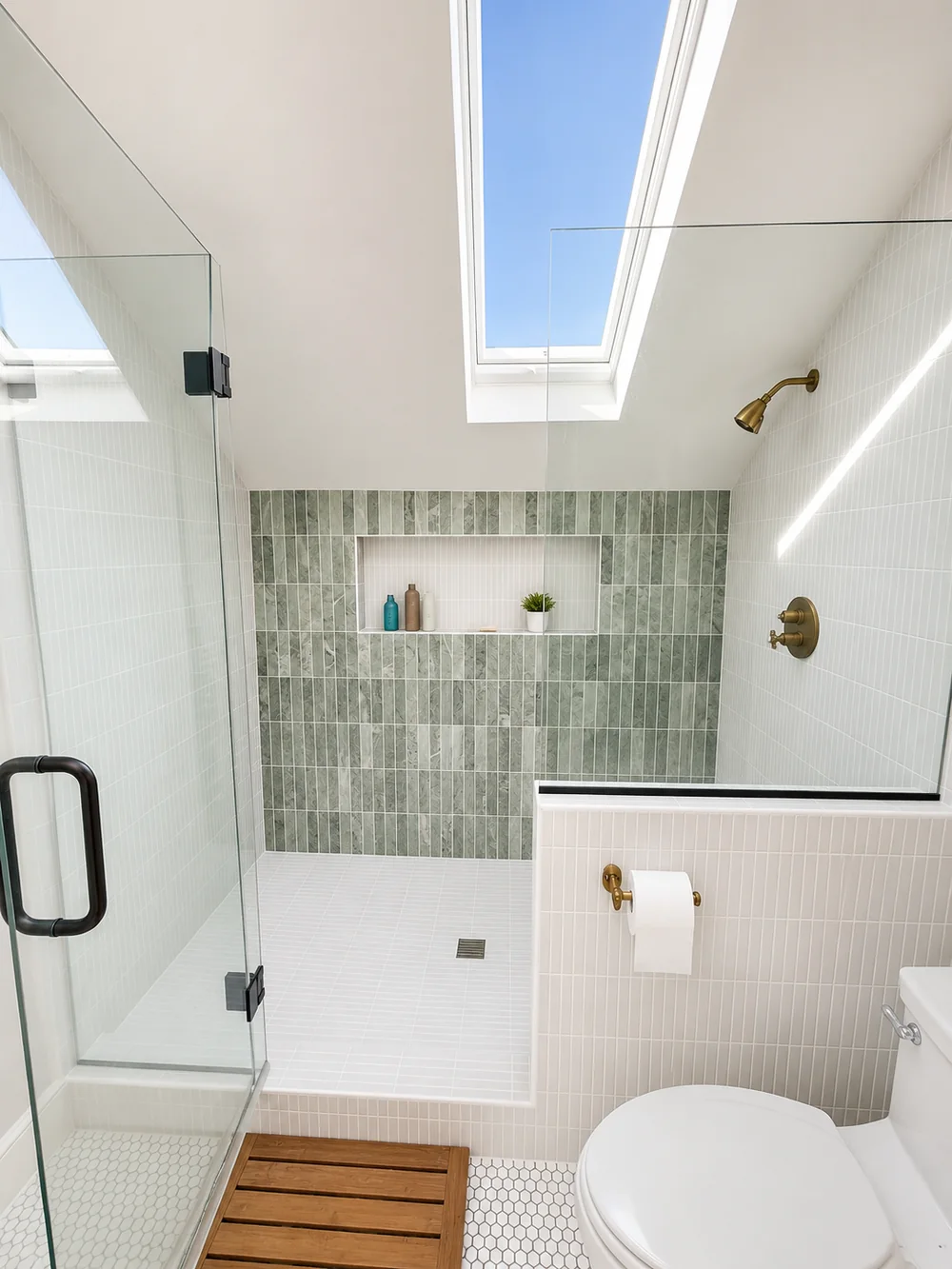
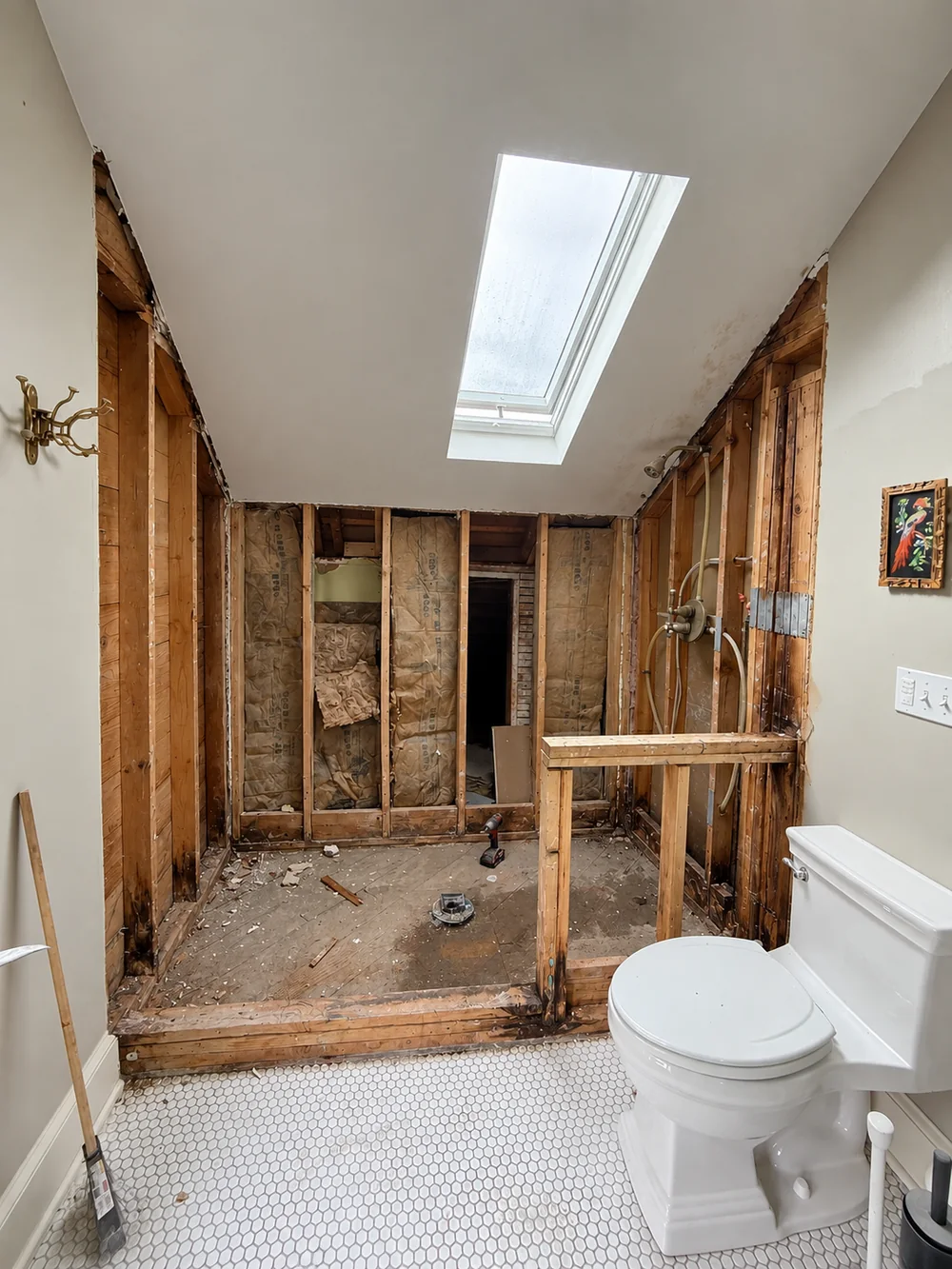 Before After
Whatever you can spot from the yard is the end of the story, not the start. Decay travels inside the grain, hidden under paint and tucked behind siding, so the spongy patch or dark bloom you can press with a thumb shows where it ran out, not where it got in. On a wall held damp by fog and shade season after season, those two points can sit a surprising distance apart. Put a number to a photo and you have really priced a hope, and that hope comes due as a change order the day the wall opens.
That is why we show up and get our hands on the wood. We split what we can be sure of from the outside from what only an open wall will reveal, and the estimate is laid out the same: the sure work at a firm number, the rest held on a separate line you green-light before any saw starts. You will always know which number is firm and which is not, because the page says so.
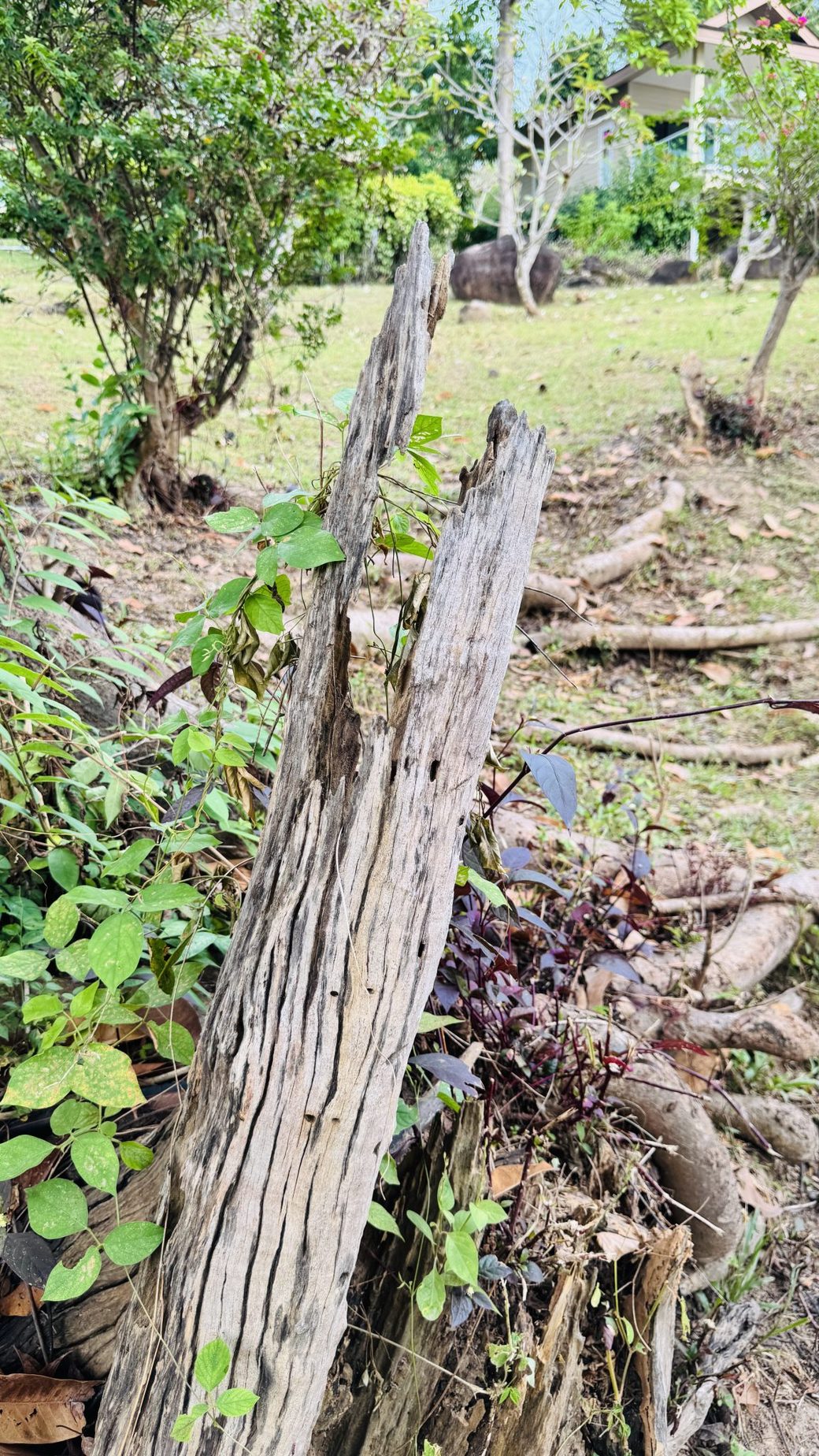
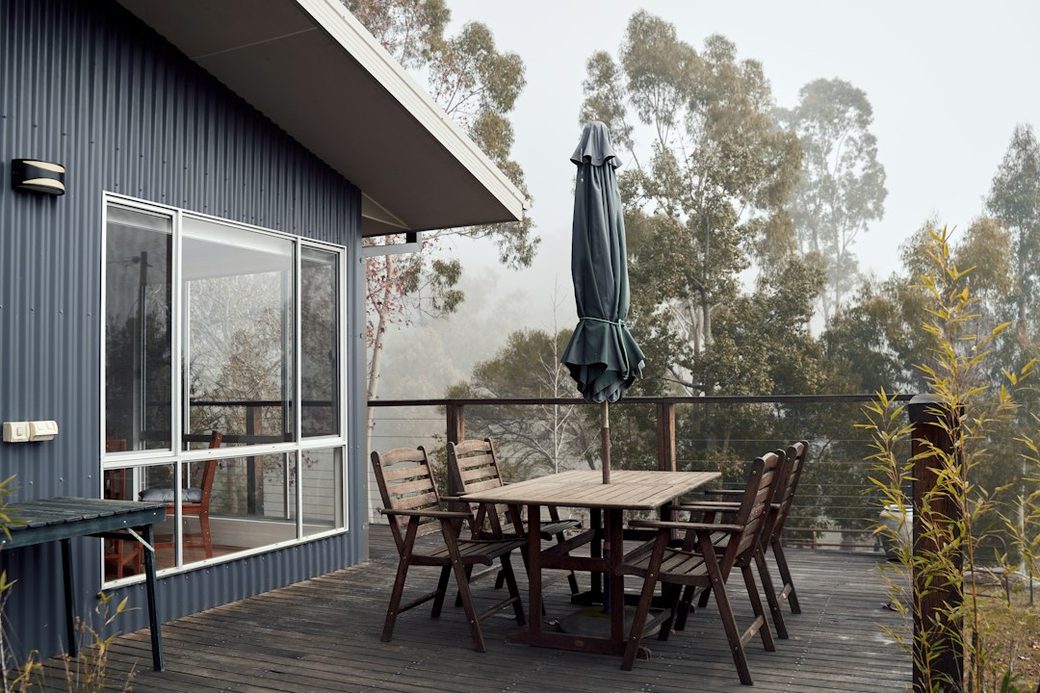
Homes close to the wildlife refuge and Lake River sit low enough that fog and damp air linger well into most mornings. The older downtown houses have had decades for that dampness to work on original trim, while the newer subdivisions further out are only starting to feel it.
Cutting the rot away is only half the task. The half that truly decides things is choosing wood that will not surrender in the same spot a decade later.
The first job is to make new wood vanish into the old, because a fix you can still pick out a year on is a fix done wrong. On a 1920s home up on the downtown bluff, the corner boards may well be the original cedar; where they are, cedar goes back, run to that very shape. If the shape was dropped from production long ago, we build it up out of plain stock until the face lies flush and its shadow lands right where the neighbors cast theirs.
What gives cedar and redwood their staying power is the oil sealed in the heartwood, and the sapwood you buy in a board today is nothing like the old growth it stood in for. Finger-jointed pine, primed, costs the least and paints up clean, yet it turns to punk fast wherever the damp lingers, which in this climate is nearly year round, so it stays well above the dirt and off the bottom of any trim. PVC and fiber cement, by contrast, will never rot. Where some detail keeps giving out, a water table, the trim beneath a window hung with no head flashing, the very foot of a corner board, those two are the sensible pick. The cost per foot is higher; what it buys is never having to come back a third time.
Framing calls for its own judgment. Whatever bears on concrete or rides low to the ground returns as pressure-treated stock, since bare fir pinned against a damp foundation is precisely what rotted the original plate. When a joist needs sistering or a stud needs replacing, Douglas fir does the work, cut and nailed to shoulder the same load the old piece did, not just enough to bridge the hole.
Hardware deserves more thought than it gets. Modern treated stock is loaded with copper, and copper devours plain galvanized fasteners, so anything driven into treated wood or into cedar is stainless or hot-dipped galvanized, full stop. Run an ordinary screw into cedar and within a few wet months rusty black weeps trail down the board, and no paint laid over them will ever cover it.
One last step: each board is sealed with primer on every face, the sawn ends as much as the flats, before it is ever fastened up. End grain left bare pulls moisture in the way a wick does, and whether a crew bothers with that or lets it slide predicts the life of the repair better than whatever brand sits on the paint can.
Four questions settle how large a rot repair turns out to be. The first pair you can work through on your own, inside an hour, with a screwdriver and nothing else.
Does it hold weight? A length of trim, the lowest course of siding, a water table: none of that keeps the house standing, so a rotten piece is an afternoon gone and not much else. A deck ledger, a post base, a sill plate or a rim joist is a different story, because the building leans on it, and that means shoring, solid replacement wood, and a permit with an inspection. Within the city limits that runs through the City of Ridgefield Community Development Department; out on the acreage around town it is Clark County, and a wide span can call for engineered, stamped plans. The board is never what sets the price. It is getting it out from under a load without a thing shifting.
How far does the soft wood reach? Step the screwdriver down the board every few inches until the tip stops sinking in, then push on a good twelve inches past the last soft spot you find. Rot runs along the grain well ahead of anything the surface shows, and quitting where the visible damage ends is the number one reason a repair has to be done twice.
When does epoxy make sense? Occasionally, and we will flag it if so. A good consolidant and filler can rescue a profiled piece that nobody stocks anymore, an old sash, a porch post, a bit of period casing, provided the decay is still a shallow pocket and has not eaten all the way through. They hold no weight, though, and they are not a way to wriggle out of opening a wall. If someone offers to pour epoxy into a spongy sill plate, they are quietly scheduling the job again.
And what sits right over the top of it? That answer is the one that settles whether the repair holds at all. The water started higher up, a kickout that was never put in where a roofline runs into a wall, a gutter overflowing its edge in a hard rain, siding shoved down into a garden bed, a deck ledger with nothing flashed across the top of it. We chase that source down and close it off before a single new board goes in, listed on the same estimate, since fresh wood set under a leak that is still running only gets bought twice.
The straight answer is the price tracks the amount of rot, and nobody can pin that amount down until the wall or the deck is open. A few things are known before then. A contained repair in a single spot, a short run of trim or a couple of soft deck boards, sits at the cheap end. The moment joists, sills or post bases enter the picture the figure climbs, because structural work pulls shoring and an inspection in behind it. What moves the number most is the count of seasons that leak has been running. In a town that draws rain the better part of the year, the least costly fix is the one you take on this season, not next.
The part that surprises people is where the dollars go. Wood is the smallest line on a rot invoice. The weight of the bill is labor and access, building out staging or figuring a safe ladder set, pulling siding well past the damage to work behind it, shoring a load while the rotten member is swapped, and then buttoning the wall back so nothing shows. The same stretch of bad trim costs well over twice as much two stories up as it does where you can reach it from the ground, and a job divided between opposite corners of the house ends up higher than one bigger repair kept to a single place.
Roughly in sequence, you pay first for labor, then for the sealing that makes the fix stick, house wrap and flashing, siding, primer and topcoat, then for the lumber itself, and a permit with inspection at the end when the work is structural. Each piece that has to be removed and rehung shows as its own entry, a gutter, a downspout, a wall light, a length of deck railing, a satellite dish off the eave, so you can read off exactly how much is the wood and how much is getting to it.
Already sitting on a written bid from another company? Bring it by. On most written estimates we will either match what it says or undercut it by 10%, and you get that commitment on paper.
10%
Pass it over with a couple of pictures of the trouble spot. Send it before 5pm and you have an answer that day.
Most of this work happens on the outside of the house, well away from the rooms you actually use, which makes it one of the easier jobs to carry on around. Here is the usual shape of it.
We do a walk-around with you, call out the sections coming off, and settle where the dumpster, staging and lumber will go, which on a cramped downtown lot or a wooded acreage parcel takes a bit of sorting out. Anything breakable near that wall gets moved clear first, whether you handle it or we do.
Expect a noisy day. We take the siding and trim off through the morning, and the wall is standing bare by the middle of the afternoon. Those open hours are what finally reveal whether any of the work you approved as a maybe actually turns up.
If the open wall shows more damage than we priced, you get a same-day call, photos included, before anyone cuts further. Nothing on the maybe line goes ahead without your say-so.
New framing and sheathing go back in, and the flashing and house wrap go on before we leave that day, so no opening is left standing bare overnight in the wet. If weather beats us to the finish, we sheet the wall over and tape it down tight until the skies clear.
The siding goes up again, the trim next, then a bead of sealant and a coat of primer. From the curb the place already passes for done, and this is the point where a neighbor tends to wander up, curious who did the work.
Last on is the finish coat, then the yard gets a good sweep, and we go over the whole job with you against the estimate, each line confirmed. The offcuts, the rotted wood we tore out and the dumpster all head off with us when we go.
The quickest test is to lean on the suspect wood with a screwdriver or the corner of a key. Firm wood resists; wood that is rotting lets the tip push right in, feels soft or crumbly, and often sits under paint that has bubbled or peeled in patches. If almost no pressure is needed to sink the tip, what is under the paint is already gone. Snap a photo, add a line on what you are looking at, and send it along. Anything in before 5pm hears back that day.
Every so often that is genuinely the whole job, and if so, you will hear that from us plainly. But when the softness carries on past the board you flagged, we will not skin new siding over it and pretend the work is done. Covering rot does nothing to stop it; it keeps chewing the framing behind the new boards, and a second trip to fix that properly costs more than handling it fully at the outset.
We hit this often enough that the pricing already allows for it, rather than it blindsiding you partway in. What can be checked while the wall is still closed gets a firm figure; anything the opened wall might turn up is parked on a separate line with its own number. Not a dollar of that second line proceeds before you have reviewed the photos and said to keep going.
Whether it is covered comes down to the specifics of your policy and to how the water found its way in, and that is really a conversation for your insurer, not your contractor. What we can do is keep a careful record as we open things up, photos plus written notes on all of it, so a claim rests on documented findings rather than a verbal account.
We take care of that whenever a job calls for one. Putting structural framing back, or rebuilding the load path beneath a deck, needs a permit, and which office issues it turns on where the house sits. Inside the Ridgefield city limits that is the City of Ridgefield Community Development Department; out on the unincorporated acreage nearby, it is Clark County, and a long span can need engineered, stamped plans. As a licensed Washington contractor, WA Lic. #EVERGRS757MC, we file it and schedule the inspections. Plain siding or trim on its own usually needs no permit.
A contained trim or siding job is typically a day, occasionally two. Anything structural runs longer, because shoring the load, scheduling the inspection, and weathering the opening back in all fall in a set sequence, and the finish coat needs a dry stretch before it will harden. The estimate lays out the day count. You can carry on with your routine through most of it, but keep your phone close on the day the wall opens, since any decision about what is hidden behind it will come to you then.
Just about always. Bevel siding, shingle courses and the standard casings are either in stock or milled to order, and when a profile has genuinely vanished we rebuild it from solid stock so its face and reveal end up flush with the runs on each side. Matching the color is the easy half. If you still have the original can or its paint code it is fast, and failing that, we read a match off a chip shaved from the wall.
Summer is the simpler time, late June or so into September, because an opening sits exposed for the least time in that window. Even so, we take rot work on year-round and seal each section as it is finished, instead of leaving it all for the end of the week. Holding off for dry weather usually works against you, because the water keeps coming while you delay and a small soft spot only gets larger.
Our shop is at 505 SE 184th Avenue in east Vancouver, a straight run north up I-5 to Ridgefield with no river to cross, so we are on a job here and back without burning half a day in traffic. We take jobs across the whole city, from the pre-1930 homes up on the downtown bluff along Pioneer Street and Main Avenue, out to the fast-growing new subdivisions around the schools, down to the low lots near the Lake River waterfront, and on to the rural acreage, outbuildings and wells on the edges of town. Licensed in Washington, WA Lic. #EVERGRS757MC.
Three of the 50 reviews on our Google profile, in the homeowners' own words.
David's work was terrific. Repaired a rotted out structural framing issue in a bathroom and replaced (and resized!) a window in the same space. He initially quoted a two day job but was able to finish in a single day. Dedicated! Will be using him again.
Joe H.Bathroom framing repair
We talked to 4 different contractors and only David, of Evergreen, took the time to climb up to our roof to check out the job. The others gave us bids based upon a photo. Evergreen was not the cheapest but the extent of the work they did was worth every penny.
Steve K.Roof and exterior work
Evergreen crew installed three skylights for us. Once we opened the ceiling there was more to do than expected and they handled it without drama. Clean work, fair price, and they cleaned up after themselves.
Foad M.Three skylights
Send photos and a short description. If it arrives before 5pm you get an answer the same day.
Already have a written estimate from someone else? Send that too. We match or beat most estimates by 10%.
Built for the wet side of the river.

Licensed and insured remodeling contractor serving Vancouver, WA and the Portland metro.
Oregon CCB #262707 · WA Lic. #EVERGRS757MCEvergreen Renewal Services LLC
505 SE 184th Ave Unit 320
Vancouver, WA 98683
© 2026 Evergreen Remodeling. Oregon CCB #262707 · WA Lic. #EVERGRS757MC. Evergreen Renewal Services LLC. All rights reserved.
Same day response on anything sent before 5pm.