

Our specialty
Wood rot repair in Vancouver, WA
Rot never announces itself. It shows up as paint that will not hold, trim that gives under a thumb, a deck board that feels soft in one spot. By then the water has been in the wood for years. We find where it got in, open up everything it touched, and rebuild the structure underneath.
Licensed and insured. Oregon CCB #262707 · WA Lic. #EVERGRS757MC
On anything sent before 5pm
We match or beat most written estimates
Remodels completed
What rot repair covers
Anywhere water meets wood, which in this climate is everywhere. The usual jobs:
Siding and trim
Rotted corner boards, window and door trim, belly bands, and the sheathing behind them.
Decks
Soft boards, rotted joists and beams, and the ledger connection where a deck ties into the house, which is where the serious failures start.
Structural framing
Rim joists, sill plates, wall studs and posts that have been wicking moisture.
Around windows and doors
Failed flashing that has been feeding water into the wall for years.
Bathroom and kitchen subfloors
Slow leaks that soften the floor before anyone notices.
Not sure which one it is?
Send photos and a short description. Anything in before 5pm gets an answer the same day, and we will tell you honestly if it is not a job for us.
The same wall, opened and closed
On rot work this is the only proof that means anything. A finished photo shows a wall. A pair shows what was behind it.
Drag the handle. One bathroom, the shower wall opened to the studs after a leak: framing stained black where the water sat, insulation exposed, the drain open in the subfloor. Then the same space closed up and tiled under the same skylight.
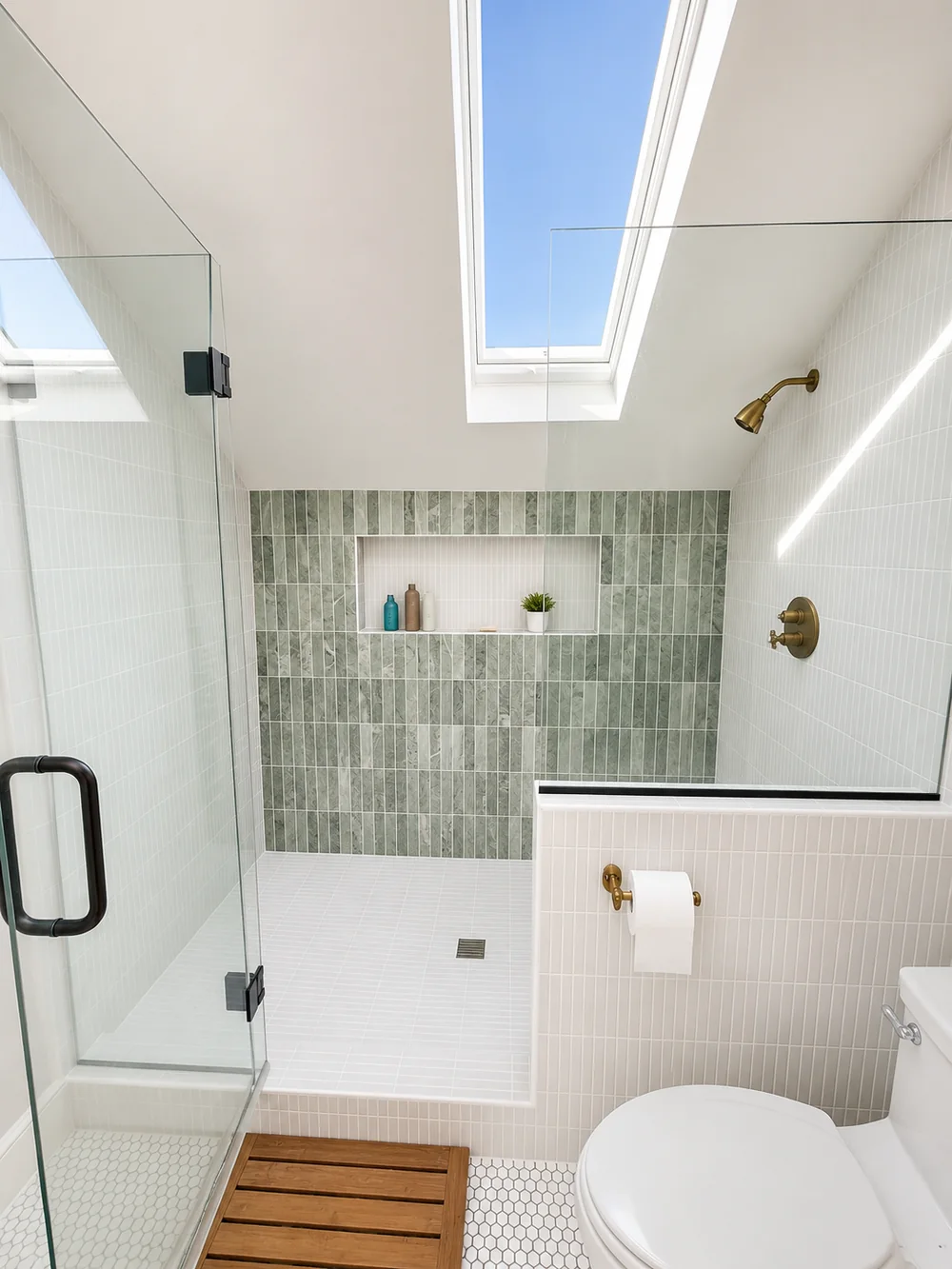
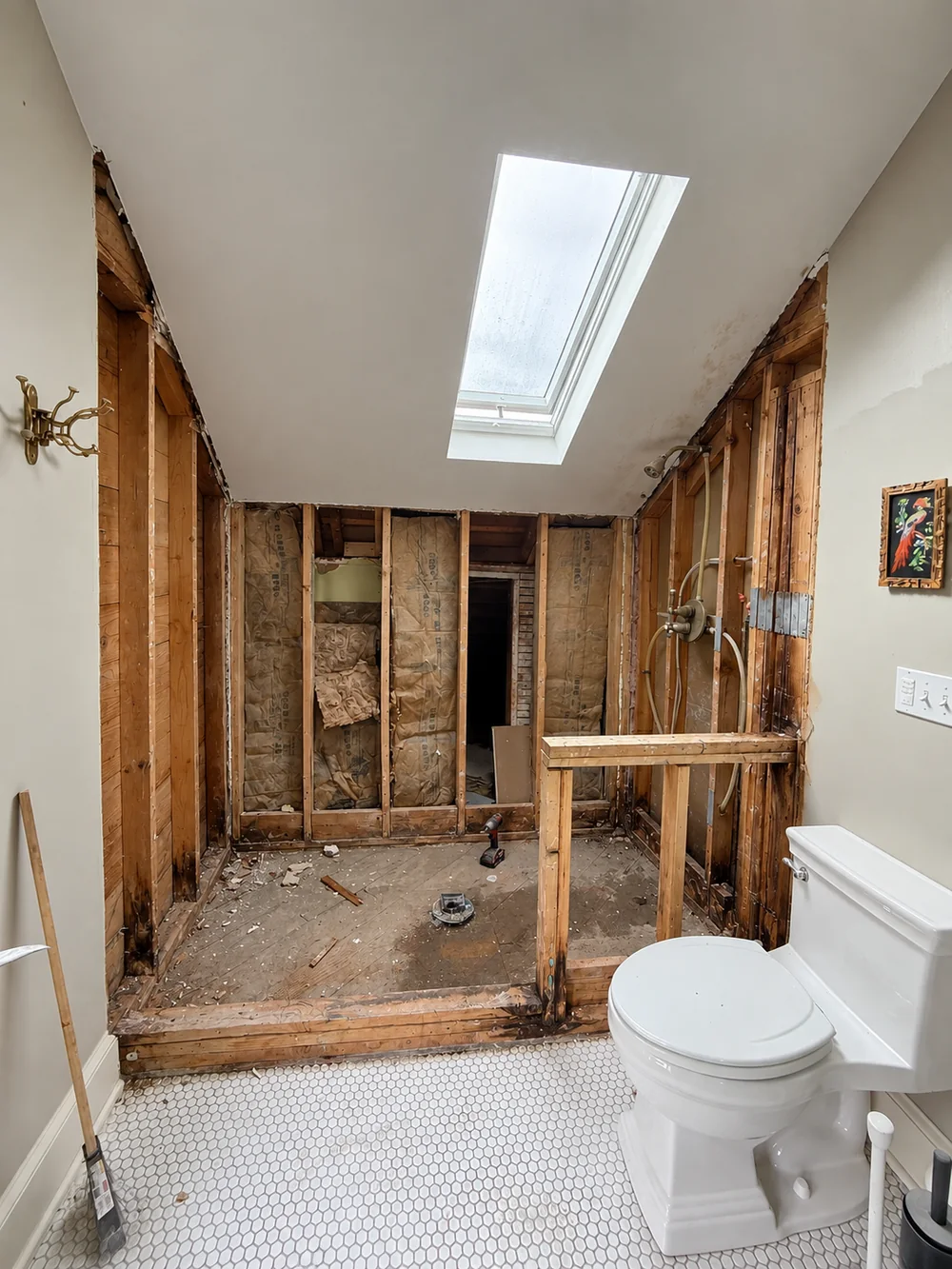 Before After
Why nobody can quote this from a photo
What you can see is never the whole problem. Rot spreads inside the wood, behind the paint and behind the siding, and the visible damage is the last part to show. A quote given from a photo is a guess, and the polite version of what happens next is a change order.
So we look at it in person, tell you what we can confirm and what we will only know once it is open, and price it that way: the confirmed work firm, the possible extent as a clearly separated line you approve before we touch it. You will know what is guesswork and what is not, because it says so on the estimate.
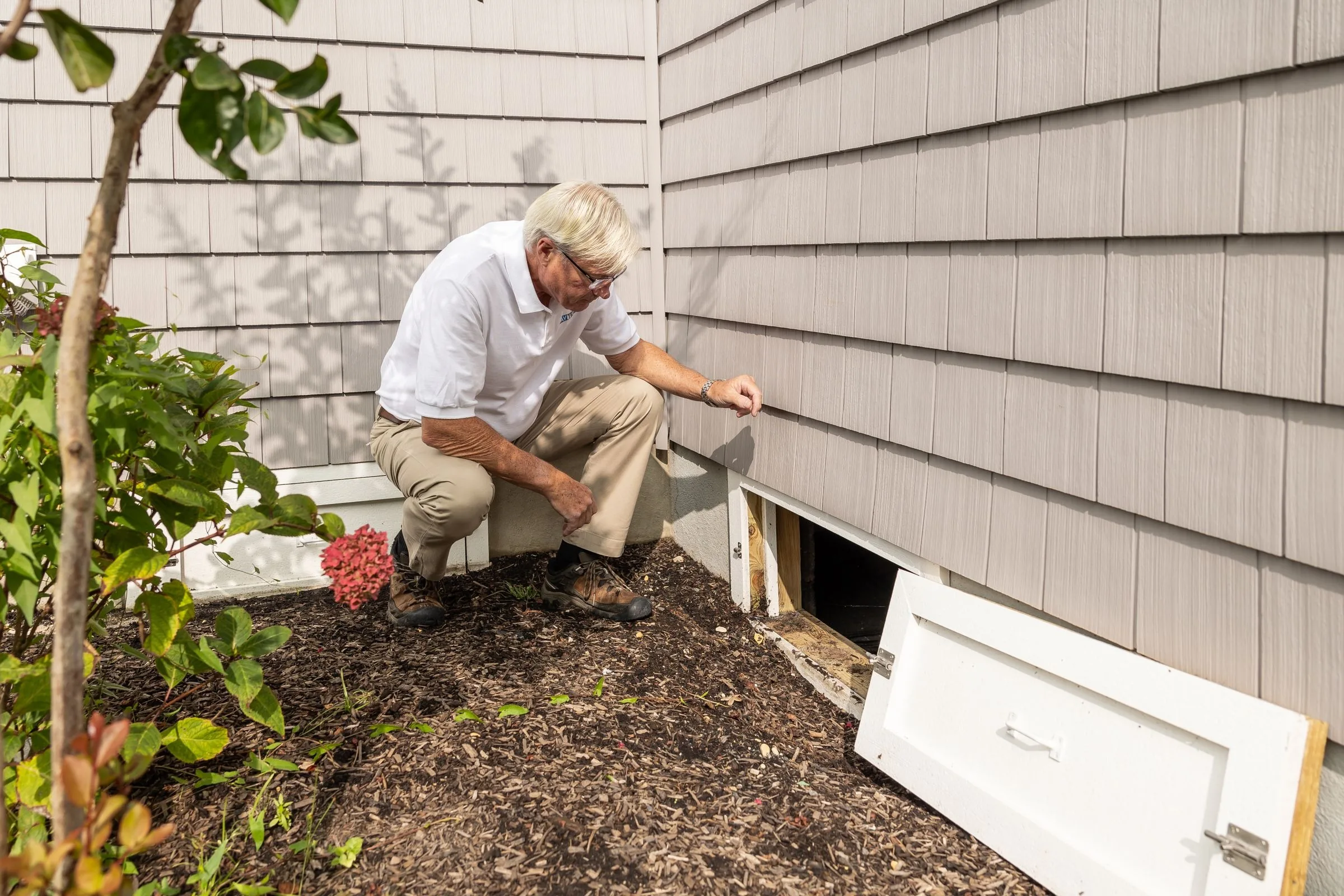
Crawlspace hatch off, siding intactThe siding looks fine, so we start at the crawlspace opening
How the repair actually goes
Every rot job runs the same sequence, because skipping a step is how the same repair gets sold twice.
Find the water.
The damage is downstream of the entry point. Fixing the wood without fixing the flashing, the grade, or the gutter above it means doing this again in five years.
Open until the wood is sound.
We cut back to clean, dry, solid material, not to the edge of what is visibly bad.
Rebuild the structure.
Like for like or better: sistered joists, new sill sections, proper posts. Structural repairs are done to code, not patched.
Close it up so water cannot return.
Flashing, house wrap laps, back-priming, sealed end grain. The boring details that decide whether the repair lasts.
Match the finish.
Siding profile, trim dimensions, paint. Done right, you cannot find the repair from the street.

New drywall, sheet by sheetBoard goes in off the stack, seams still open and untaped
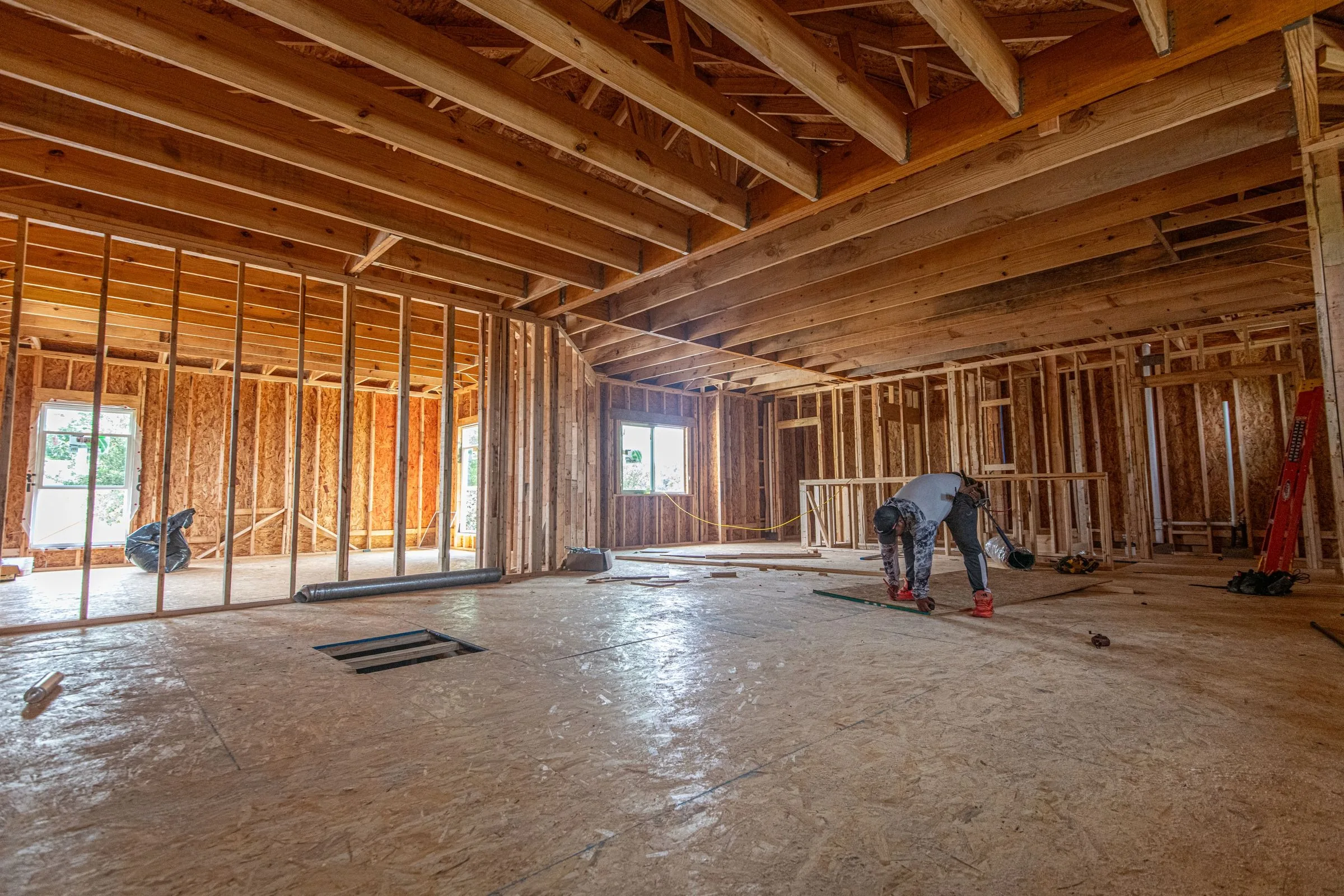
Open to the framingEvery stud bay and joist still open, nothing covered up yet
What we rebuild with, and why the material matters
Rot repair is only half carpentry. The other half is picking material that will not be back in ten years.
Like for like is the default, because a repair that reads as a repair is a bad repair. If the house has cedar corner boards, cedar goes back. Where the old profile is not made any more we build it up from stock so the reveal and the shadow line match the run either side of it.
Cedar and redwood last because of the oils in the heartwood, though the sapwood in modern boards is far less durable than the old growth it replaces. Primed finger jointed pine is cheaper and it paints beautifully, and it fails fast anywhere it can stay wet, so we keep it off ground contact and off the bottom of a trim run. Cellular PVC and fiber cement trim do not rot at all. That makes them the right answer for the pieces that keep failing: the foot of a corner board, a water table, the trim under a window with no head flashing. They cost more per foot and they save you the third repair.
Framing is a different decision. Anything that touches concrete or sits close to grade goes back as pressure treated, because untreated fir against a damp foundation is how the sill rotted in the first place. Sistered joists and new studs are Douglas fir, sized and fastened to carry what the original carried rather than what fits the gap.
Fasteners matter more than people expect. The copper in modern pressure treated lumber eats plain galvanized steel, so treated wood and cedar both get hot dipped galvanized or stainless. Ordinary screws in a cedar board bleed black streaks down the face inside a season, and no amount of paint hides it afterwards.
Every new piece gets primed on all six faces before it goes up, with the end grain sealed. End grain drinks water the way a straw does. That one step, done or skipped, decides more about how long the repair lasts than the brand of paint over it.
Repair the board, or replace what is behind it
Four questions set the size of the job. You can answer the first two yourself, on a Saturday, with a screwdriver.
Is it structural? Trim, a water table, a bottom course of siding: none of that carries anything, and a bad one is a bad afternoon. A rim joist, a sill plate, a post base or a deck ledger carries the building, and those get temporary support, sound material and an inspection. The difference is not the price of the board. It is everything around replacing it.
How far does the soft wood run? Press along the piece with a screwdriver every few inches until it stops sinking in, then keep going a foot past that. Rot travels inside the grain ahead of anything you can see on the surface, and cutting back only to the edge of the visible damage is the most common reason a repair comes back.
Is epoxy an option? Sometimes, and we will say so. Consolidant and filler are genuinely good on a profiled piece you cannot buy any more: a sash, a porch column, a run of period trim, where the damage is a pocket rather than a through failure. They are not an option on anything structural, and they are not a way to avoid opening a wall. Anyone offering epoxy for a soft sill plate is selling you the same job twice.
And what is above it? This is the question that decides whether the repair holds. The water got in somewhere: a missing kick out flashing where a roof dies into a wall, a gutter that overshoots in a downpour, siding buried in a flower bed, a deck ledger with nothing lapped over the top of it. We fix that first and price it alongside the wood, because new material under a live leak is work you pay for twice.
What it costs
The honest answer is that the price follows the extent, and the extent is not knowable until the wall or deck is open. What we can tell you up front: small, contained repairs like a run of trim or a few deck boards sit at the low end; structural work involving joists, sills or post bases costs more because it involves temporary support and inspection; and the single biggest cost driver is how long the water has been running, which is why the cheapest rot repair is always the one done this year instead of next.
Where the money actually goes is worth knowing, because it is not where most people expect. Lumber is usually the smallest part of a rot bill. The cost sits in labor and access: staging or a ladder plan, pulling siding back far enough to work in, temporary support while a load comes off a post, and then putting the wall back so the repair disappears. That is why ten feet of rotten trim at the second floor costs more than twice the same run at eye level, and why two small repairs on opposite corners of a house cost more than one larger one.
Roughly in order, the bill is labor first, then the closing work that makes the repair permanent, which is flashing, house wrap, siding, primer and paint, then the lumber itself, then the permit and inspection if the work is structural. Anything that has to come off and go back on is its own small line: a gutter, a downspout, a light fixture, a deck rail, a satellite dish. We itemize all of it, so you can see which part of the number is the wood and which part is getting to it.
If you already have another contractor's written estimate, bring it. We match or beat most estimates by 10%, in writing.
10%
Bring us the other estimate
Send it over with photos of the problem. Before 5pm means an answer today.
What it is like while the work is happening
Rot repair spends most of its life outside, which makes it one of the easier jobs to live through. This is the shape of it.
Before we start
We walk the house with you, mark what is coming off, and agree where the dumpster, the staging and the material pile go. Anything breakable within reach of that wall moves first, by you or by us.
Opening day
Siding and trim come off in the morning and the wall is open by the afternoon. This is the loud part. It is also the hour that settles whether the second column of the estimate was needed.
The phone call
If what is behind it is worse than what we priced, you hear it that day, with photographs, before anything further is cut. Nothing in the possible column happens without you saying yes to it.
Structure and dry in
New framing, new sheathing, then flashing and house wrap the same day wherever we can get there, so the wall is never left open to a night of rain. If the weather turns early, it gets covered and taped.
Closing up
Siding, trim, sealant, primer. From the street the house looks finished at this point, which is usually the day the neighbors start asking who did it.
Paint and the walk
Topcoat, a swept site, and a walk around with you against the estimate line by line. The offcuts, the old material and the dumpster leave with us.
Worth knowing about Vancouver homes
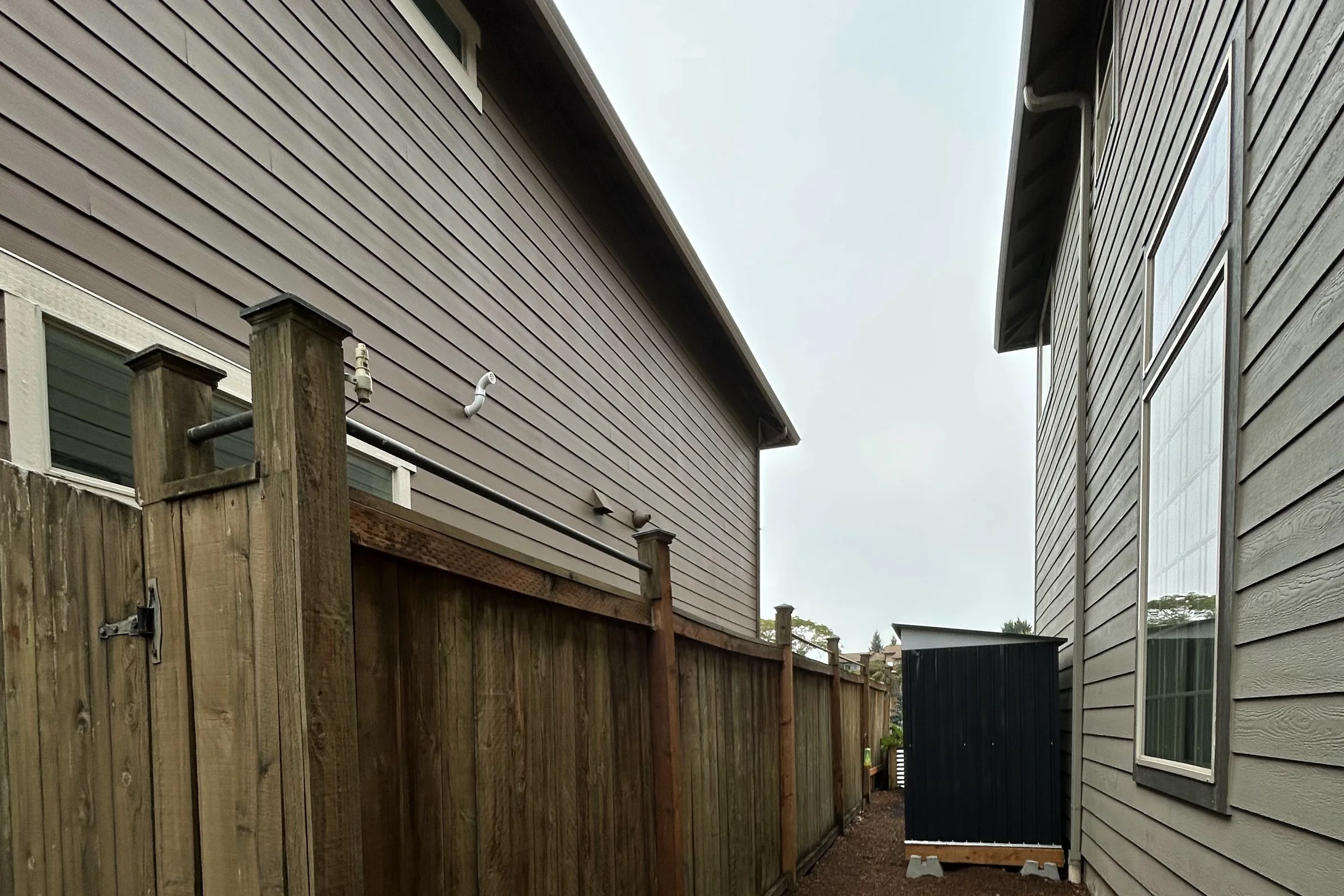
Housing age predicts where the rot is. Older close-in neighborhoods have deep eaves and old-growth lumber that resists rot surprisingly well, but decades of paint layers hide long-running trim and sill damage. The 1980s and 90s subdivisions east and north of town are the opposite: composite sidings from that era, tighter eaves and early builder-grade flashing mean walls that took water from day one. And on any home near the river or on a shaded, wooded lot, the north face fails first. It is the side nobody looks at.
Questions we get on every rot job
How do I know if it's rot or just old paint?
Press it. Sound wood feels solid under a fingertip; rot feels soft, papery or spongy, and paint over it often bubbles or flakes in patches. If a screwdriver sinks in with light pressure, the wood is gone. Send us a photo and a description either way, and if it arrives before 5pm you will hear back the same day.
Can you just replace the visible bad boards?
We can, and sometimes that is genuinely all it is. But we will tell you honestly when the softness continues past the board, because covering rot does not stop it. It keeps spreading behind the new material, and the second repair costs more than the first one would have.
Will you find more damage once it's open?
Often, yes, and we price for that possibility up front instead of surprising you. The estimate separates confirmed work from possible extent, and nothing in the second category gets done without your approval.
Does homeowner's insurance cover rot repair?
That depends entirely on your policy and on what caused the damage, and your insurer is the right person to ask. What we can do is document what we find as we open it up, with photos, so you have a clear record for any claim conversation.
Do you handle the permits?
Yes. Structural repairs that need a permit get one, pulled through the right authority, which around here can be the City of Vancouver, Clark County, or an Oregon jurisdiction. Licensed in both states, so the river is not a complication.
How long does a rot repair take?
A contained trim or siding repair is usually a day or two. Structural work runs longer, because temporary support, an inspection and a dry in step all have to happen in order, and paint wants dry weather. You get a day count with the estimate. You do not need to be home for most of it, but we want you reachable on the day the wall comes open, because that is when a decision may be waiting.
Can you match my siding and trim if the profile is old?
Usually, yes. Lap siding, shingle courses and most trim profiles are either still sold or can be milled, and where a piece is genuinely obsolete we build it up from stock so the reveal matches the boards either side of it. Paint is easier if you still have the old can or the color code, and we can match off a chip if you do not.
What time of year should I do this?
The dry months are easier and the wall stands open for less time, but we work year round and we dry in as we go rather than at the end of the week. Waiting a season is almost always the worse trade, because the water keeps running the whole time and the repair only gets bigger.
Where we do this work
We work out of 505 SE 184th Ave in Vancouver, and most rot jobs land inside a twenty mile ring around it. In Clark County that is Vancouver itself and the neighborhoods people actually name when you ask where they live: Hazel Dell, Salmon Creek, Orchards, Felida, Cascade Park, Fishers Landing, Minnehaha, Walnut Grove and Five Corners.
North and east we are regularly in Battle Ground, Ridgefield, Brush Prairie, La Center, Camas, Washougal, Yacolt, Hockinson, Sifton and Barberton. Shaded lots and wooded frontage out that way give us the failure we see most often, which is a north wall that never quite dries between one wet week and the next.
Oregon is the same trip for us. Licensed there as CCB #262707 · WA Lic. #EVERGRS757MC, so a job on the far side of the river does not need a second contractor: Portland, Gresham, Troutdale, Fairview, Wood Village, Milwaukie, Happy Valley, Lake Oswego, Beaverton, Clackamas, Oregon City and Gladstone. Thirty two towns in all. If yours sits just outside the ring, ask anyway. The radius is a guide, not a rule, and the answer costs nothing.
The rest of what we do
What homeowners say
Three of the 50 reviews on our Google profile, in the homeowners' own words.
David's work was terrific. Repaired a rotted out structural framing issue in a bathroom and replaced (and resized!) a window in the same space. He initially quoted a two day job but was able to finish in a single day. Dedicated! Will be using him again.
Joe H.Bathroom framing repair
We talked to 4 different contractors and only David, of Evergreen, took the time to climb up to our roof to check out the job. The others gave us bids based upon a photo. Evergreen was not the cheapest but the extent of the work they did was worth every penny.
Steve K.Roof and exterior work
Evergreen crew installed three skylights for us. Once we opened the ceiling there was more to do than expected and they handled it without drama. Clean work, fair price, and they cleaned up after themselves.
Foad M.Three skylights
Tell us what needs fixing
Send photos and a short description. If it arrives before 5pm you get an answer the same day.
Already have a written estimate from someone else? Send that too. We match or beat most estimates by 10%.
- Call(971) 715-0673
- Emaildavid@evergreenremodeling.co
- Office505 SE 184th Ave Unit 320, Vancouver, WA 98683
- LicenseOregon CCB #262707 · WA Lic. #EVERGRS757MC, licensed in WA and OR