

The repair we know best
Wood rot is really a water story, and Portland hands water decades to tell it. Our busiest calls come out of the close-in neighborhoods packed with early-1900s bungalows, four-squares and Victorians, the ones in Hawthorne, Woodstock, Sellwood and up around Mount Tabor where original old-growth fir siding, trim and window flashing have shed a century of wet winters and are finally giving out. A tall tree canopy keeps the north walls and porches in shade, so they hold moss and stay damp for months, and the oldest crawlspaces sit on foundations that have settled over the decades. A fix that actually holds means tracing the leak to where it truly begins, taking the wood back well past any softness, and putting right whatever carries weight before fresh siding ever goes up. It is most of our business and the repair people ask for by name.
Licensed and insured. Oregon CCB #262707
On anything sent before 5pm
We match or beat most written estimates
Remodels completed
A long Portland wet season gives water months to work into every outside seam an old house has, and the tree shade keeps those seams from drying between storms. On these century-old homes, here is where it turns up first, and what we most often end up opening:
The boards that face the weather first on an old bungalow: corner boards softened down near the ground, the fir casing wrapped around each original window and door, the belly band and water table spanning the wall, and the sheathing waiting in behind all of it.
Decking that feels soft underfoot, the joists and beams carrying it, and the ledger that fastens the whole deck back to the house. On an old porch or deck off a century-old home, shaded by big trees and buried under dropped needles much of the year, the ledger holds damp the longest, and that is where the real trouble begins.
Sill plates, rim joists, studs and the base of a post that have spent years pulling damp out of the ground. On these old homes we meet it most in the original crawlspaces, where a settling foundation and poor airflow keep the soil underneath from ever drying.
Window and door flashing that gave up years ago, letting rain slip behind the trim with each new wet spell, and beneath this heavy canopy of shade that hidden cavity stays damp for months on end.
A shower pan or toilet seal weeping unseen for months, soaking the old-growth fir subfloor and the joists beneath, which on a century-old home can go unnoticed until a section of the floor finally lets go underfoot.
Send a couple of pictures and a short note on what has you worried. Get it to us before the clock hits 5pm and we answer the same day, and when it turns out to be a job better left to another trade, we will say so and steer you somewhere that can help.
On rot work this is the only proof that means anything. A finished photo shows a wall. A pair shows what was behind it.
Drag the handle. Left, a shower alcove from one of our jobs with its walls off and the leak damage plain to see in the framing. Right, the finished shower, tiled in green and white under the same sloped ceiling.
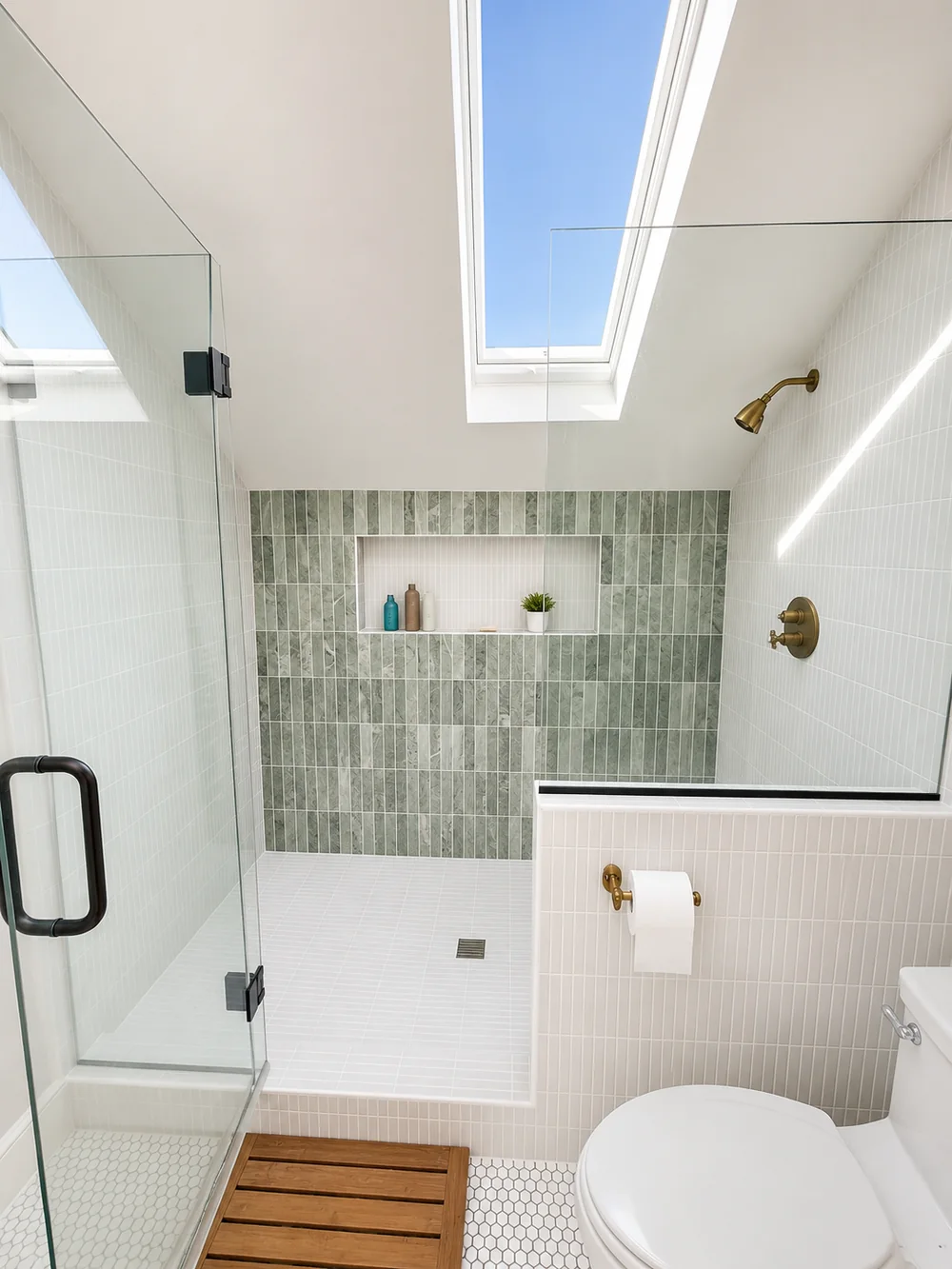
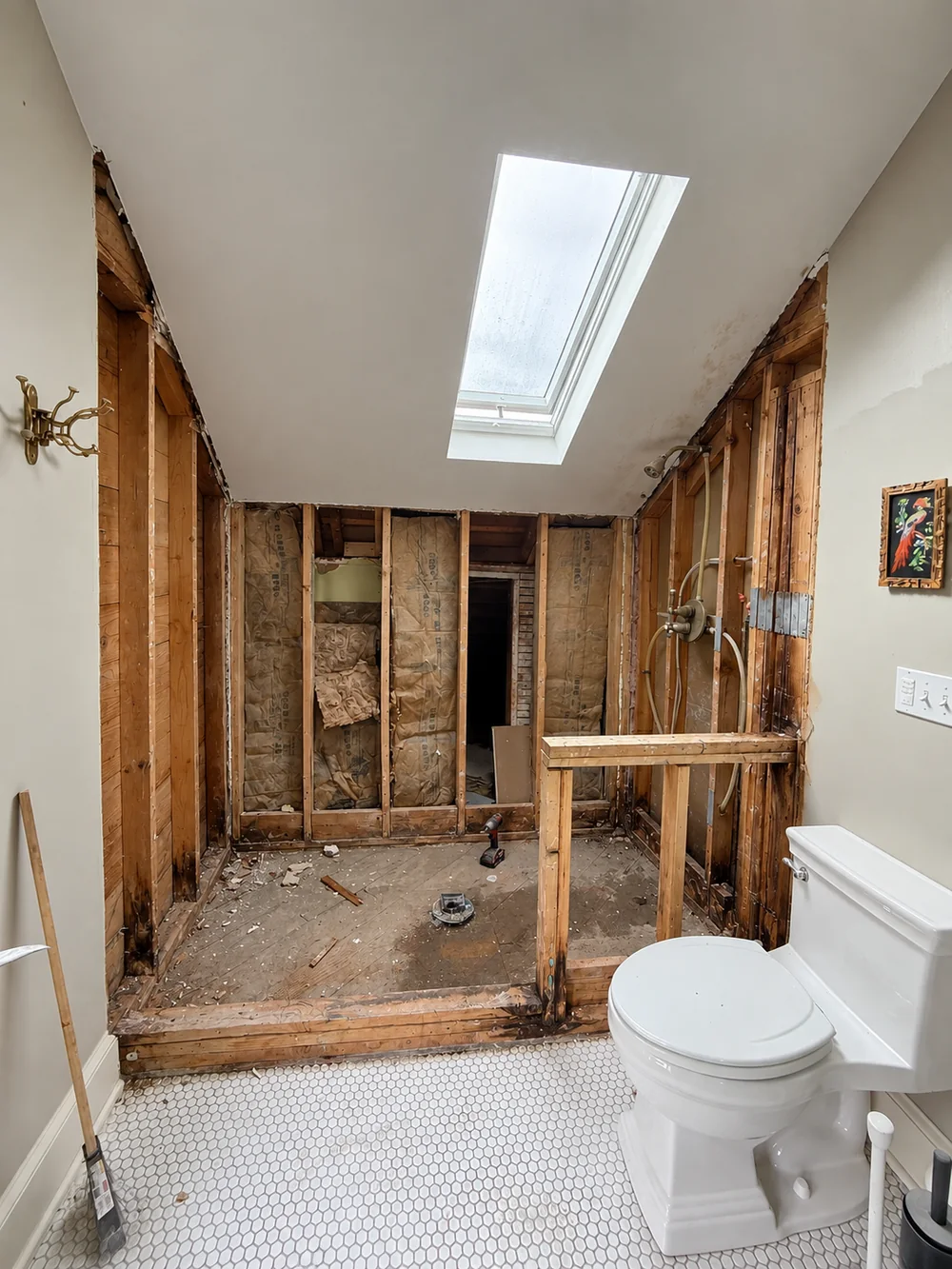 Before After
Whatever you can see from the sidewalk is the tail end of the damage, not its beginning. Rot runs along the grain underneath the paint and inside the siding, so the soft spot you press on shows where the decay gave out, not where the leak first started. On a century-old wall that has stayed shaded and damp for decades, those two points can sit a long way apart. A price pulled off a photo is really a price pulled out of hope, and that hope shows up as a change order the day we actually open things up.
So we drive out and look the wall over by hand. We draw a clear line between what can be confirmed from outside and what only the open wall will show, and the estimate reads the same: the work we are sure of at a firm price, anything still hidden on a line of its own that you okay before we cut into it. There is never a question about which figure is solid, because the paperwork makes it plain.

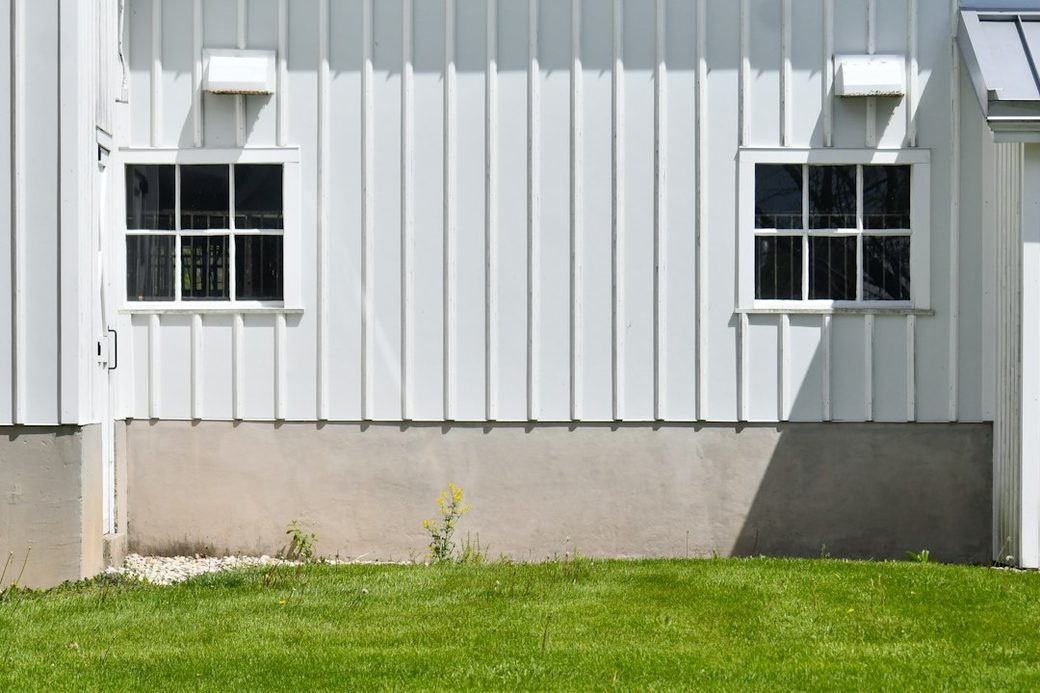
A hundred-plus years of close-in Portland weather is a long run for any original wall to hold up, and the material that went up back then was never going to last forever. Add a tight lot with little room for air to move around the siding, and problem spots tend to show up sooner than they would on a newer, more open property.
Any carpenter can cut out a rotten board. The part that actually matters is what you put back, because the wrong choice means this exact spot is soft again before long.
The first goal is for the repair to disappear completely, because new wood you can still pick out a year later was not done right. If a bungalow still carries its original cedar corner boards, cedar is what goes back, cut to the same profile. Where that profile left the market generations ago, we glue one up from stock and shape it until its face and reveal fall in with the boards on either side.
Cedar and redwood earn their lifespan from the oils held in the heartwood, though the sapwood in a board you buy today is a shadow of the old growth it replaces. Primed finger-jointed pine is cheap and paints up clean, but it surrenders fast wherever it stays wet, and in this climate that is most of the year, so we keep it off the dirt and off the bottom of a trim run. Cellular PVC and fiber-cement trim do not rot at all, which makes them the right pick for the details that keep failing: where a corner board meets the ground, a water table, the window casing that never had head flashing over it. The price per foot is higher, and it means no third visit to the same failure.
Framing is a separate decision. Anything that lands on concrete or sits low near grade goes back pressure-treated, since untreated fir sitting flat against damp concrete is how the first sill plate gave out in the first place. A replacement joist gets sistered in Douglas fir, and a new stud is the same, each sized to bear the load its predecessor did rather than just fill the space.
Fasteners get less thought than they deserve. The copper in modern treated lumber eats ordinary galvanized steel alive, so anything driven into treated stock or cedar is stainless or hot-dipped galvanized. Put a plain steel screw in a cedar board and rusty black streaks bleed down the face inside one wet season, and after that no coat of paint will ever hide them.
Last, nothing goes up until it has been sealed with primer on every face, cut ends included. Raw end grain soaks up water the way a straw pulls a drink, and that single habit, done or skipped, tells you more about how long the fix survives than any paint you put over it.
Everything about the scope hangs on four questions. Two of them you can put to rest yourself over a weekend, with a screwdriver and a few minutes.
Is it holding the house up? Trim, a water table, the bottom course of siding: none of that bears weight, so a rotten length is a wasted afternoon and little more. A sill plate, a rim joist, a post base or a deck ledger is a different animal, because the building rests on it, and that work brings temporary shoring, sound replacement stock, and a permit with an inspection through the City of Portland Bureau of Development Services. Wider spans can need engineered, stamped plans. The cost is never the board itself. It is pulling that member out from beneath its load without letting a thing drop.
How far does the rot actually reach? Set a screwdriver against the wood at short intervals and push until the point quits biting, then keep testing a solid foot past the last place that gave. The decay has already crept down the grain past anything visible on the outside, and stopping where the obvious damage ends is the leading cause of a repair that does not hold the first time.
Is epoxy the answer here? Once in a while, and we will say when. A good consolidant and filler can rescue a milled piece you cannot buy anymore, an old window sash, a porch column, a length of period casing, as long as the decay is a shallow pocket rather than a failure clean through. On anything that carries load they are useless, and they are no shortcut around opening a wall. Anyone offering to pour epoxy into a soft sill plate is quietly booking the same job a second time.
And what sits over the top of it? That is the question that decides whether the repair lasts at all. The water came in somewhere higher up: a kickout that was left off where the roofline meets a sidewall, a gutter spilling past its lip in a downpour, siding packed into a planting bed, a ledger left without a cap flashing over it. We find that source and close it before any new wood goes in, priced on the same sheet, because lumber nailed in over a leak that is still live just gets paid for a second time.
The honest answer is the bill follows how much rot is actually there, and no one knows that for sure until the wall or deck is open. A few things hold true before then. A small, contained fix, a short run of trim or a few soft deck boards, sits at the low end. Once sills, joists or post bases enter the picture the figure rises, because structural work pulls shoring and an inspection along with it. The one factor that moves it most is how long the water has had to work, which is why, in a climate this wet, the cheapest repair is the one you take on now and not a year from now.
Where the money actually lands tends to catch people off guard. Lumber is usually the least of it on a rot invoice. The real cost is labor and simply getting to the work: rigging staging or sorting out a ladder, peeling siding back far enough to reach behind the damage, bracing the weight on temporary posts while the rotten piece is swapped, then closing the wall so nobody can tell. Put that same bad trim ten feet up under the eaves and it bills out at more than twice the ground-level price, and two separate patches on opposite ends of the house will always total more than a single, larger one.
If you rank the pieces, labor is the biggest by a wide margin. Behind it comes the work that seals the repair against weather for good: flashing, building wrap, the siding itself, and then primer with a finish coat. The boards you are replacing are a smaller cost than any of that, and a permit with its inspection only appears when the repair is structural. Separate from all of it, every fixture that has to be unbolted and put back, a downspout, a length of gutter, an exterior sconce, a section of deck railing, a dish mounted on the fascia, shows up as its own entry, so the lumber share and the labor share are easy to tell apart on the page.
Already have a written bid from someone else? Pass it over with a photo of the damage. We will beat or match most written quotes by 10%, and you will have that promise in writing.
10%
Send it my way with a picture or two of what is going on. If it reaches us ahead of 5pm, you have an answer the same day.
Nearly all of this work happens outdoors, on the skin of the house, not inside the rooms where you spend your day, so it sits among the easiest remodels to live alongside. Here is the usual rhythm of it.
We take a walk around the property with you, flag the sections slated to come off, and sort out where the dumpster, the staging and the lumber pile will go, which on a narrow close-in lot can take some planning. Whatever is breakable near that wall we shift out of harm’s way first, whether that falls to you or to us.
This is the noisy one. We work the siding and trim off over the morning, and the framing is in full view by early afternoon. That stretch with the wall laid open is what decides whether anything in the possible-extent column has to happen at all.
Find worse damage once the wall is open and you hear about it the same day, with pictures, before a single further cut goes in. Anything in the possible-extent column waits on your go-ahead.
The replacement framing and fresh sheathing get nailed into place, and we lay building wrap and flashing over them before we pack up that day, so a raw opening never sits exposed through a rainy night. And if the sky turns before we are closed in, the gap gets tarped and taped tight and left dry until the wet moves off.
The siding is reinstalled, the trim set back on after it, and then caulk and one coat of primer to start. By now the house looks complete from the sidewalk, and this is usually the point where a neighbor comes by wanting a card.
The finish coat goes on at the very end, the yard gets a thorough sweep, and we walk the whole repair with you, ticking each item off the estimate as we go. The sawn offcuts, the rot we pulled out, and the dumpster are all loaded up and gone when we pull away.
Do a quick probe. With a screwdriver (a key works too), push into the wood where you are worried. Firm, healthy wood resists and the tip barely marks it. Where rot has set in, the tip goes in with little resistance, the surface gives like cork or cardboard, and bits may flake off wet. Watch the finish as well, because paint tends to bubble and lift in small islands right where the wood below has begun to soften. If the point sinks easily, that board is already compromised. Photograph it from a couple of angles, add a sentence about what you are looking at, and get it to us. Before 5pm means an answer that day.
Occasionally the damage really is confined to the one board, and if that is what we find, we will say so plainly. More often the soft wood keeps traveling past the piece you pointed out. When it does, we will not nail a fresh board over the top and pretend it is handled, because rot pays no mind to what is covering it. It keeps consuming the structure out of sight, and the do-over you are then stuck paying for easily exceeds the cost of opening it up properly the first time.
It surfaces on plenty of jobs, which is exactly why we account for it when we quote rather than dropping it on you partway in. One number on the estimate covers the work we can stand behind before anything is opened. A second, clearly separate number covers what might be waiting out of sight. That second number is never acted on until you have gone through the photos with us and said to continue.
It depends on the specifics of your coverage and on why the water got in, and only your insurer can give you a straight answer on that. A contractor is not the one to decide it. What we contribute is a solid paper trail. Every spot of rot is shot and logged the instant we expose it, so that if you choose to file, your claim rests on dated evidence instead of your account alone.
We do, every time a job needs one. Replacing a bearing member, a sill, a rim joist, a post base, or the framework that carries a deck, requires a permit, and in Portland it is issued by the City of Portland’s Bureau of Development Services. A wide clear span may call for engineered plans that carry a stamp. Because we are licensed in Oregon, CCB #262707, we handle the application and arrange each inspection. Purely cosmetic siding or trim, with no structure underneath, will not normally need a permit.
A tidy fix in trim or a run of siding usually takes a day, maybe two. Anything structural needs more days, since the temporary support, the inspection, and drying the wall back in have to come one after another, and fresh paint simply will not cure while the weather stays wet. The estimate gives you a day count. You can carry on with your routine through most of it, but we want to be able to reach you the day the wall comes open, because that is the day you might have to decide how far the repair goes.
In nearly all cases, yes. Lap siding, shingle courses and the everyday casing shapes are still sold or can be cut to order at a millwork shop, and where a profile has vanished for good we glue our own up out of stock and work it until the face and the shadow line fall in with the neighboring boards. Color is the simpler end of it. Hand us the leftover can or its formula and it is quick, and with neither around, we read a match off a chip shaved from the wall.
Summer is the kindest window, late June to September or so, simply because the opening needs to stay bare for the shortest time. We do not confine the work to then, though. These repairs run in every month, and as each stretch is finished we seal it tight against the rain, so your house is never left gaping overnight. Delaying until things dry out usually costs more than it saves, since the leak never lets up for a moment while you put it off, and a small, cheap fix today becomes a big one the longer it sits.
We run out of a shop at 505 SE 184th Avenue in east Vancouver, a short hop across the Columbia on the I-205 bridge into Portland, so a job here does not eat half our day in traffic. We take rot work across the close-in neighborhoods of old bungalows and four-squares, Hawthorne and Belmont, Sellwood and Westmoreland, Woodstock, Mount Tabor, Montavilla, Richmond, Alberta, Irvington and Laurelhurst, up into the older homes of the West Hills, out to St. Johns, and east through Gresham, Troutdale and Fairview. South of the river we are regularly in Milwaukie, Happy Valley, Lake Oswego, Beaverton, Clackamas, Oregon City and Gladstone. Licensed in Oregon, CCB #262707. Permits run through the City of Portland’s Bureau of Development Services.
Three of the 50 reviews on our Google profile, in the homeowners' own words.
David's work was terrific. Repaired a rotted out structural framing issue in a bathroom and replaced (and resized!) a window in the same space. He initially quoted a two day job but was able to finish in a single day. Dedicated! Will be using him again.
Joe H.Bathroom framing repair
We talked to 4 different contractors and only David, of Evergreen, took the time to climb up to our roof to check out the job. The others gave us bids based upon a photo. Evergreen was not the cheapest but the extent of the work they did was worth every penny.
Steve K.Roof and exterior work
Evergreen crew installed three skylights for us. Once we opened the ceiling there was more to do than expected and they handled it without drama. Clean work, fair price, and they cleaned up after themselves.
Foad M.Three skylights
Send photos and a short description. If it arrives before 5pm you get an answer the same day.
Already have a written estimate from someone else? Send that too. We match or beat most estimates by 10%.
Built for the wet side of the river.

Licensed and insured remodeling contractor serving Vancouver, WA and the Portland metro.
Oregon CCB #262707 · WA Lic. #EVERGRS757MCEvergreen Renewal Services LLC
505 SE 184th Ave Unit 320
Vancouver, WA 98683
© 2026 Evergreen Remodeling. Oregon CCB #262707 · WA Lic. #EVERGRS757MC. Evergreen Renewal Services LLC. All rights reserved.
Same day response on anything sent before 5pm.