

What keeps us busy along the 212 corridor
Clackamas never grew around one downtown or one developer, and the rot calls we take here reflect that. This unincorporated stretch of Clackamas County sits east of I-205 between Milwaukie and Happy Valley, and it reads first as a retail and light industrial district, built up around Clackamas Town Center since 1981, with Camp Withycombe and the Kaiser Sunnyside medical campus adding to that identity, rather than as a residential suburb with a single character of its own. The houses that do exist sit in scattered pockets along the Highway 212 corridor: a meaningful share from the 1960s and 70s, a solid block from the 1980s and 90s, and a majority built in 2000 or later. On 43 to 45 inches of rain most years, what fails depends less on the neighborhood than on which decade that particular pocket happened to go in, and a house sitting close to a parking lot or a roadway wears differently than one tucked into a quieter block.
Licensed and insured. Oregon CCB #262707
On anything sent before 5pm
We match or beat most written estimates
Remodels completed
In Clackamas, the decade a particular pocket went up tells us more about where water gets in than the street address does. On a 1960s or 70s house near the retail strip, or a 2000s build a few blocks over, these are the points that fail first, and the ones we open up most:
The first pieces to go are corner boards softened at the base, the casing around windows and doors, water tables and belly bands, plus whatever sheathing is hiding behind them. On an older pocket near the 212 corridor that trim is often real cedar nearing the end of its run. On a newer infill a few streets over, built within the last couple of decades, it is just as likely to be a factory-primed composite that failed at a seam instead.
Soft decking, the joists and beams underneath it, and the ledger bolting the whole deck back to the house. That connection is usually the first to give no matter when the deck itself went up. A deck off a 1970s pocket near the commercial strip and one off a 2000s infill a few streets over fail in the same spot once the ledger starts holding water, just on different calendars.
Rim joists, sill plates, studs and post bases that have spent years pulling moisture out of the ground, something we find under a 1960s pocket as often as under a house finished in the last two decades. Low ground close to the roadway and parking lot runoff common along Highway 212 tends to drain slower than a quieter residential block, which only gives that moisture more time to sit.
A window or door head loses its flashing quietly, and from that point on, every storm pushes a little more moisture behind the casing. Age does not change that mechanic, only the material involved: an older corner of the patchwork is usually relying on a metal strip nearing the end of what it can shed, while a newer corner depends on a bedded sealant joint that tends to fail all at once instead of gradually.
Hidden bathroom plumbing does this kind of damage on its own timeline, not the house’s. A toilet flange that has been letting a thin ring of water escape for a season, or a tub overflow gasket gone slightly loose, can turn the wood underneath spongy well before anything looks wrong from the room above. That holds whether the fixture is original to a 1960s house near the retail strip or part of a bathroom finished a handful of years ago on the newer end of the patchwork.
A couple of clear pictures and one line about what caught your eye get this started. We read everything that lands in the inbox before the end of the business day and answer that same afternoon, wherever in Clackamas you happen to be, close to the mall or out on a quieter block. On the rare occasion this turns out to be somebody else’s trade entirely, that is exactly what we will tell you instead of taking the work anyway.
On rot work this is the only proof that means anything. A finished photo shows a wall. A pair shows what was behind it.
Drag the handle. Water-darkened studs, a bare drain and open insulation give way to a sealed, tiled walk-in shower in this before and after from one of our rot repairs.
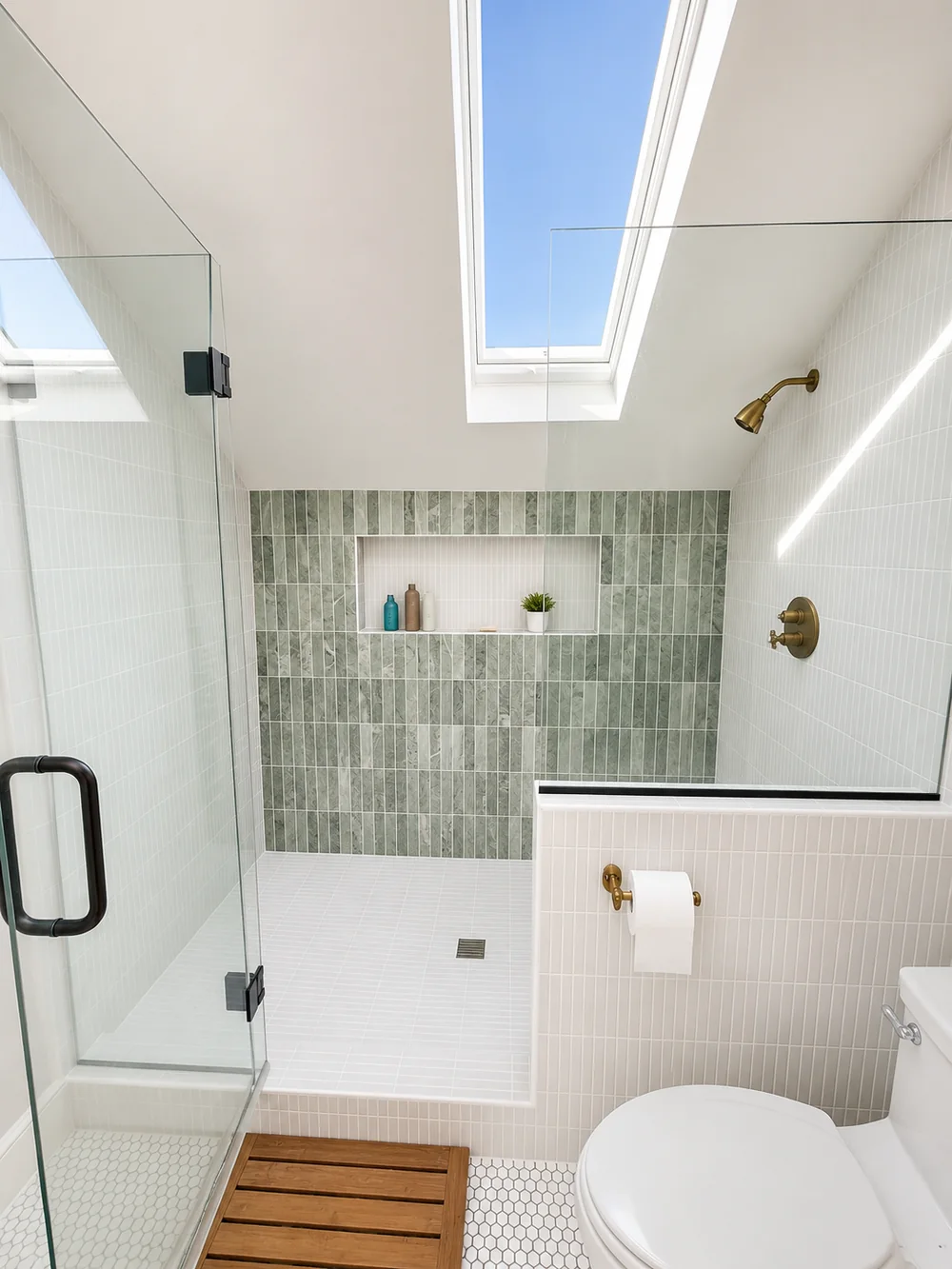
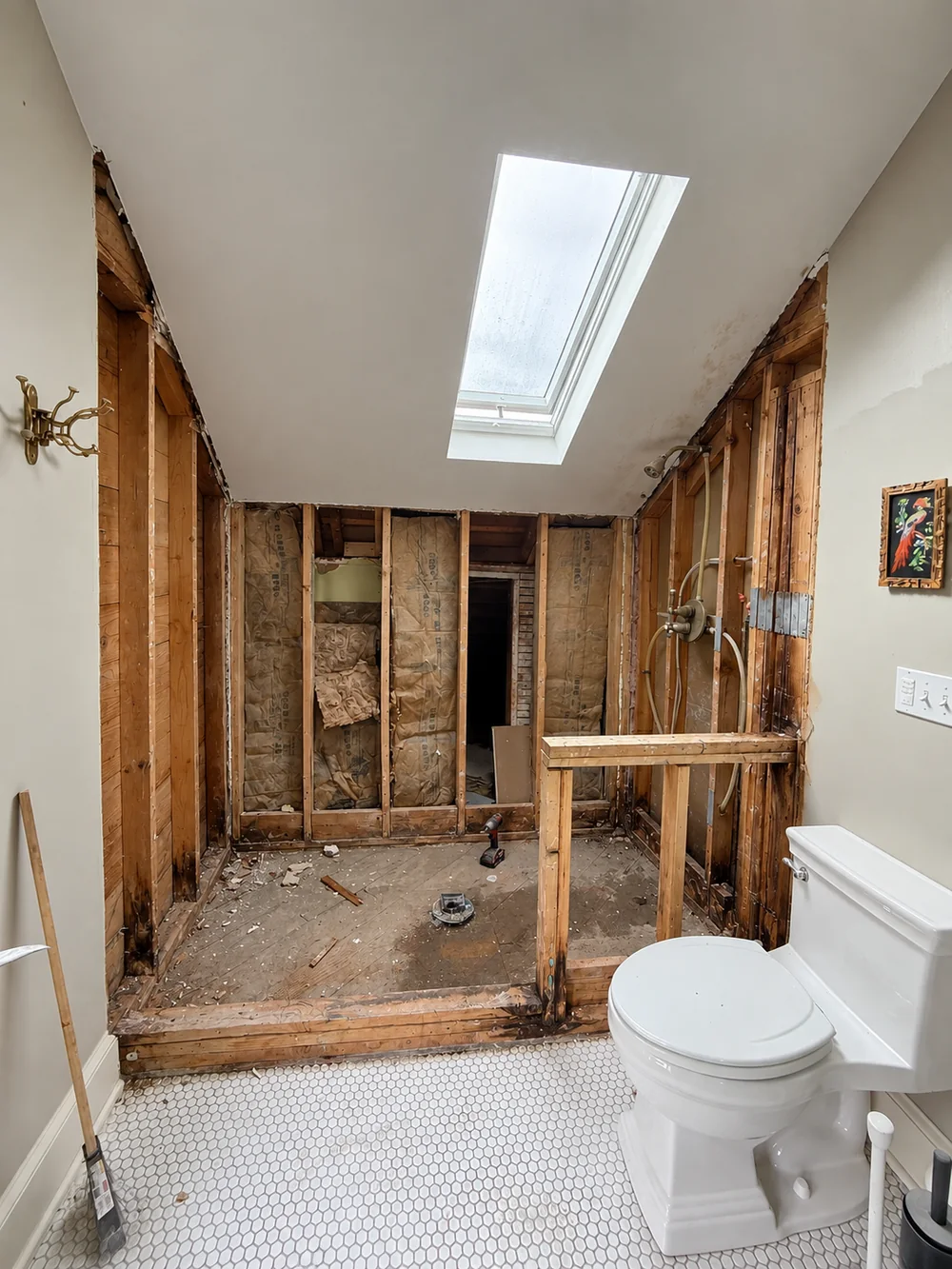 Before After
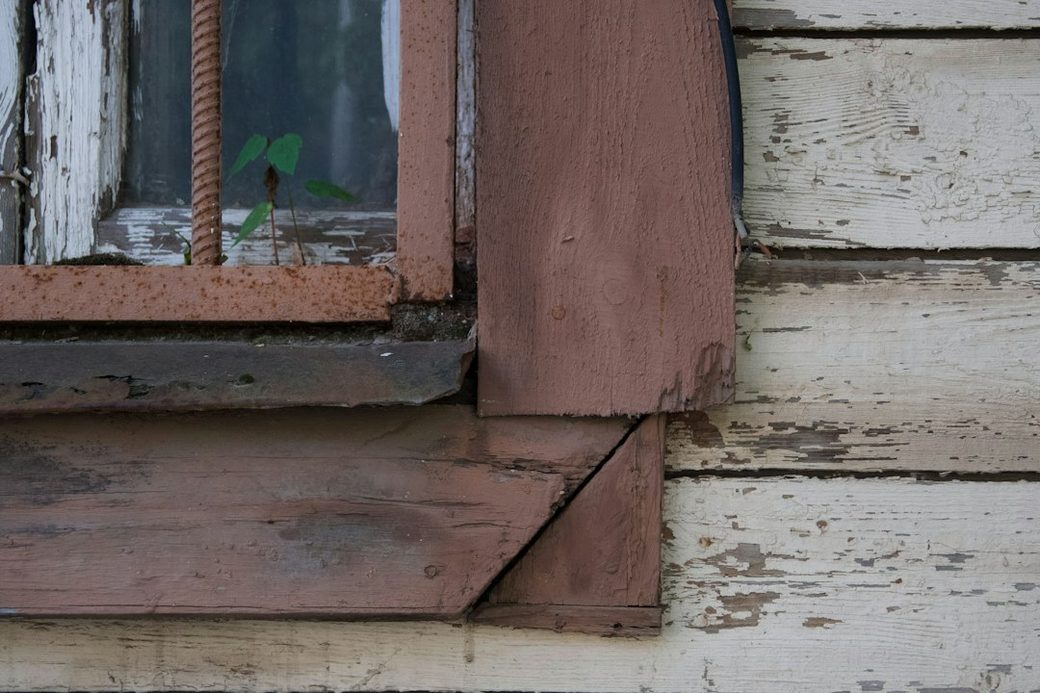
What you can see from the driveway is the last stop the rot made, not the first. Decay travels along the grain behind paint and siding for years before it ever reaches daylight, so the soft spot you can press a thumb into marks where the damage finally ran out of wood, not where the water first got in. On a 1960s or 70s pocket a block off the retail corridor, that hidden stretch can run well past what a quick look from the yard would suggest. A newer infill a few streets over hides its own version of the same problem behind different materials, which is exactly why we open the wall in person before putting a number on anything.
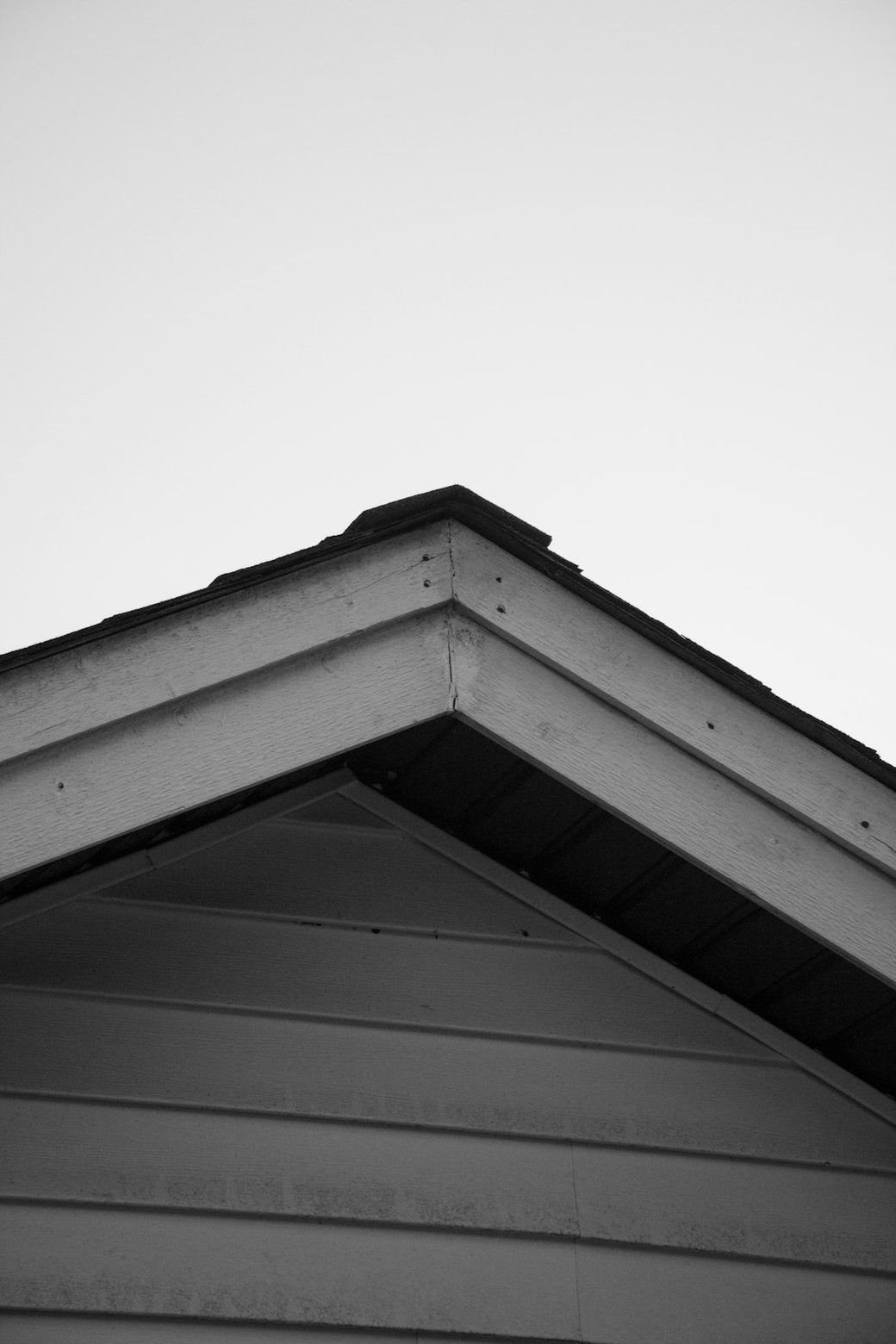
Clackamas Town Center did not land on empty ground by accident. A contested 1975 county land-use decision cleared the way for it, and the mall opened in 1981 on ground between what would become Milwaukie and Happy Valley, setting the tone for everything built up around it since: commercial and light industrial parcels along Highway 212, Camp Withycombe, the Kaiser Sunnyside medical campus, filled in first, with houses left to fit whatever ground was left over. That is a different growth pattern than a place that platted a downtown and grew outward from it, and it is why the housing here reads as a patchwork rather than a single era. A pocket from the 1960s or 70s sits a few streets from one built in the 1980s or 90s, and the newest infill, dated 2000 or later, now makes up a majority of what is actually standing. No single building boom did this. A string of smaller ones did, filling whatever lots a commercial corridor left behind.
Getting rid of a soft board takes no time at all. What actually decides whether we are back at this same spot in another decade is matching the right material to a street where no two houses necessarily share a birth year.
We start by matching whatever is already on the house, because the best repair is the one nobody can point to later. On a 1960s or 70s pocket near the retail and light industrial stretch along Highway 212, that usually means real cedar corner boards and trim, cut to a profile that is either still milled or close enough that we can build it up ourselves to match. On a house from the 1980s or 90s a few streets over, the original material is more often fiber cement or a factory-primed composite, and matching it means sourcing the right product line rather than shaping anything by hand. On the newer end of the patchwork, built in 2000 or later, the trim is usually still in production, so matching it is mostly a matter of finding the same manufacturer’s current run. Whichever decade we are matching, cedar and redwood resist rot on their own merits, but every new piece gets a borate treatment regardless, since the goal is wood that outlasts whatever put the first piece in the ground to begin with.
Four separate factors decide how big a Clackamas rot job actually turns into, and two of them do not require us at all. Walk out, poke at the wood with whatever is sitting in your junk drawer, and you will already know half the answer before we ever show up.
First: does the piece hold anything up? A length of casing, a water table, or a low course of siding is decorative, so replacing a bad run of it is cheap and quick. A sill plate, a rim joist, a post base, or the ledger under a deck is a different animal entirely, since the house is physically resting on it. Because Clackamas has no city hall of its own, that kind of carpentry gets its permit through Clackamas County’s Building Codes Division instead, along with whatever shoring and inspection the county requires before we close it back up.
Second: where does the soft spot actually end? We work along the board in small steps, testing as we go, until the material pushes back again, then keep checking a bit further still. Decay spreads through the fiber faster than it ever shows on the surface, and quitting right where the visible stain stops is the single biggest reason a rot repair gets revisited.
Third: is this a job for a filler rather than a saw? Once in a while, yes. A quality consolidant genuinely rescues a piece with a discontinued profile, a window sash or a run of trim nobody makes anymore, provided the rot sits in a shallow pocket rather than a through failure. It has no place on anything that carries weight, and we will not suggest it just to dodge opening a wall that actually needs opening.
Fourth: what actually put the water there in the first place? That is the question that determines whether a fix sticks. Closer to the retail strip, it is usually a gutter that has not been cleaned out in years or a downspout dumping straight against the foundation. Out in a quieter pocket, it is just as often a roof edge with no kickout where it meets a sidewall. Either way, we chase that source down and close it off before any new wood goes back in, and we price that fix alongside the carpentry rather than separately.
Nobody, not even us, can name a firm number before the deck or the wall is actually open, because the price follows how much rot is really back there, not the square footage of the house or which decade it was built. A few things are still predictable walking in. Trim-only work, or swapping out a run of deck boards, stays inexpensive no matter which pocket of Clackamas the house sits in. The moment a rim joist, a post base, or a sill plate turns out to be part of the picture, expect the total to climb, since that kind of carpentry brings a county inspection and temporary shoring along with it, and the single biggest factor in the final number is simply how many of this area’s wet seasons that leak has already been allowed to run.
Most people guess wrong about where their money actually goes. The replacement lumber itself is almost never the big-ticket line. What costs real money is getting to the problem and then making the fix invisible: building safe staging or working from a ladder, peeling siding back far enough to see what is actually wrong, holding weight on temporary posts while a bad section comes out, and closing everything back up so there is no trace it was ever opened.
On the invoice, crew time leads, followed by the weatherproofing that locks the repair in for good, flashing, wrap, siding, and paint, then the material itself, and finally, only when the scope is structural, the county’s permit fee. Anything removed and reinstalled along the way, a light fixture, a gutter section, a stretch of railing, shows up as its own line rather than getting buried in the total.
Got a number from someone else already? Forward it along with your photos. Our quote usually comes in at or below that figure, by around ten percent, and we will put that in writing before anything gets scheduled.
10%
Pass that number along with a picture of the spot in question. Get it to us ahead of the five o’clock cutoff and expect to hear back before we close up for the day.
Almost none of this job happens inside your living space. It stays on the skin of the house, so day-to-day life for a Clackamas household keeps running on schedule while the crew works outside, whatever decade that particular stretch of street happened to go up in. Here is generally how the days play out.
Before anything gets pulled, we walk the lot together and flag the specific sections coming off, then work out where the dumpster, the staged lumber, and the crew’s gear will live for however long the job runs. A lot pressed close to the retail and light industrial stretch along Highway 212 sometimes means less open ground to stage in than a lot a few blocks into a quieter pocket. Whatever is breakable near that wall gets relocated first, whether that is on us or on you.
Siding and trim come off section by section through the morning, and by early afternoon the framing underneath is sitting open to view for the first time, whichever decade actually built it. That open stretch is the only thing that tells us for certain whether the maybe column on your estimate turns into real work or stays exactly what it was: a possibility that never had to happen.
Should the wall actually hide more than the number we gave you, we call that same afternoon and send pictures along with it, holding off on any additional cutting in the meantime. That rule does not bend whether the surprise shows up in an older pocket near the retail strip or in a house that is barely a decade old. We wait for your yes before a single extra cut gets made.
Replacement lumber and sheathing fill the gap first, and the crew does not pack up until flashing and house wrap are both buttoned down over it, since letting a bare stud bay sit through a wet Clackamas night just restarts the exact problem we are fixing. On the rare day the weather wins the race, we wrap the opening in plastic, run tape along every seam, and pick back up once it clears.
New siding goes up, trim resets into place, and a bead of sealant plus a first coat of primer close out the exterior for the day. From the sidewalk, a pocket of houses that all look roughly the same age again is usually the first sign that the work actually happened, since nothing about the repair itself is meant to stand out.
Paint is genuinely the last step. Once it is on, the crew clears every scrap from the yard and the two of us go through the job side by side, checking what actually happened against what the estimate promised, line by line, regardless of which decade the house came from. Nothing from the repair sits around waiting for trash day, not the cutoffs, not the rotted lumber, not the dumpster itself.
Not for the test itself, only for how surprising the answer can be. Press firmly into the piece with a screwdriver blade: wood that is still sound resists and holds its shape, while wood that has actually failed lets the blade travel in with very little effort and often comes away cool, damp, and crumbly rather than splintering clean. Paint color is a poor guide either direction, since a coat applied last year can already be bubbling over solid wood, and an old, chalky coat can sit over a board that is perfectly fine. Run that same test on a sixty-year-old corner board near the retail corridor and on trim from a house built within the last decade, and you get the same honest answer both times. Send us a photo of what you find and we will tell you plainly which one it is before we ever load the truck.
Sometimes that genuinely is the whole problem, and when it is, we say so rather than inventing more work to bill for. What changes the answer is which pocket the house sits in. On an older 1960s or 70s stretch near the retail corridor, soft wood behind a single board can run considerably farther than the visible damage suggests. On a house finished within the last couple of decades, that same single board is more often the entire story, since there has simply been less time for the problem to travel. Either way, we open enough of the wall to find where the damage actually ends before we tell you what the job really is.
It happens, and when it does you are not finding out from a padded final bill. The moment we see more than the quote accounted for, you get a call and a set of photos before the saw comes back out, and work stops cold until you tell us how to proceed. On a street where the house next door might be twenty years older or newer than yours, this comes up often enough that we price for the possibility up front rather than treat it as an unusual event.
Typically not by itself. Insurance carriers tend to treat long-developing wood rot the way they treat a worn-out water heater or a roof nearing the end of its shingles, ordinary upkeep rather than a covered accident. Where that changes is when something sudden and datable actually caused the damage, a pipe that let go overnight, a windstorm that tore back a section of siding, that kind of thing. Whether your particular policy draws that line the same way is a question only your carrier can answer. What we can hand you is a clean record, dated photographs and notes on everything we find as the wall comes open, in case you do decide to file.
Clackamas County’s own Building Codes Division handles that directly, out of 150 Beavercreek Road in Oregon City, because this area has no city government or building department of its own. That is genuinely different from most of the other Clackamas County communities on our schedule, Milwaukie, Lake Oswego, Happy Valley, Gladstone and Oregon City among them, each of which runs its own city permitting program. Here, the county itself is the building authority, and we pull that permit and schedule the inspection ourselves whenever a job actually touches something structural, a sill plate, a rim joist, a post base or a deck ledger. Trim and siding work that doesn’t carry weight generally doesn’t need one.
Scope decides the schedule here more than the size of the house does. A repair kept to trim or a run of siding is usually a day, sometimes bleeding into a second. Once a sill plate, a rim joist or a post base needs rebuilding, plan on closer to a week once shoring, the county inspection and drying the wall back in are all accounted for in order. None of that changes based on whether your particular pocket went up in the 1960s or five years ago. It changes based on what the wall actually shows once it’s open.
Usually, yes, though the approach depends on which decade we’re matching. A 1960s or 70s pocket near the retail corridor often still wears real cedar trim, and where that profile is no longer milled, we build it up from stock lumber until the reveal and shadow line disappear into the boards on either side. A house from the 1980s or 90s a few streets over is more often finished in fiber cement or a factory-primed composite, which means sourcing the closest current product line rather than shaping anything by hand. The newest houses in the patchwork, built in 2000 or later, are usually still wearing trim that’s in active production, so matching those is typically the simplest case of the three.
No, and that distinction actually matters here. Clackamas was once tracked as its own census-designated place, with a population estimated around 6,965 in 2010, but the Census Bureau no longer counts it separately, and it has never had its own city government, mayor or building department the way Milwaukie, Oregon City and the other incorporated towns nearby do. For a repair, the practical effect is just the permitting path: anything structural goes through Clackamas County’s Building Codes Division rather than a city hall, since there isn’t one. Everything else about the job, the materials, the process, the schedule, is decided by the house itself and the decade it happens to be from, not by whether the place around it has its own government.
Evergreen keeps its shop at 505 SE 184th Avenue in east Vancouver, WA, and getting to Clackamas means the same Columbia crossing on I-205 as several of our other Oregon stops, continuing south past Milwaukie to where the freeway meets the Sunnyside interchange, right where Clackamas Town Center sits. It is not a detour for this crew, just another address on a normal week. Jobs here run from the retail and light industrial ground along Highway 212 out to the quieter residential pockets tucked behind it, whichever decade a given street happened to fill in. Licensed in Oregon, CCB #262707.
Three of the 50 reviews on our Google profile, in the homeowners' own words.
David's work was terrific. Repaired a rotted out structural framing issue in a bathroom and replaced (and resized!) a window in the same space. He initially quoted a two day job but was able to finish in a single day. Dedicated! Will be using him again.
Joe H.Bathroom framing repair
We talked to 4 different contractors and only David, of Evergreen, took the time to climb up to our roof to check out the job. The others gave us bids based upon a photo. Evergreen was not the cheapest but the extent of the work they did was worth every penny.
Steve K.Roof and exterior work
Evergreen crew installed three skylights for us. Once we opened the ceiling there was more to do than expected and they handled it without drama. Clean work, fair price, and they cleaned up after themselves.
Foad M.Three skylights
Send photos and a short description. If it arrives before 5pm you get an answer the same day.
Already have a written estimate from someone else? Send that too. We match or beat most estimates by 10%.
Built for the wet side of the river.

Licensed and insured remodeling contractor serving Vancouver, WA and the Portland metro.
Oregon CCB #262707 · WA Lic. #EVERGRS757MCEvergreen Renewal Services LLC
505 SE 184th Ave Unit 320
Vancouver, WA 98683
© 2026 Evergreen Remodeling. Oregon CCB #262707 · WA Lic. #EVERGRS757MC. Evergreen Renewal Services LLC. All rights reserved.
Same day response on anything sent before 5pm.