

Two houses, two different rot problems
Rot starts as a water problem long before it becomes a carpentry problem, and Felida gives water plenty of chances: somewhere around 41 to 43 inches of rain a year, heaviest from November through January, settling onto large, tree-lined lots where mature trees shade the roof and keep gutters and valleys wet longer than a bare, sunny lot ever would. What makes Felida different from most places we work is what sits under that rain. A 1970s ranch and a custom farmhouse built thirty or forty years later can stand on the same street, built from two different generations of lumber, trim and flashing, which means two houses a few hundred feet apart can fail in two completely different spots and for two completely different reasons. Tracing the leak back to where it actually started, cutting past the last soft fiber, and rebuilding whatever carries load before new siding goes back on works the same way on either house. It is most of what we do here, and it is why we read each house on its own instead of assuming the place next door tells us anything.
Licensed and insured. WA Lic. #EVERGRS757MC
On anything sent before 5pm
We match or beat most written estimates
Remodels completed
On a Felida street, a 1970s ranch and a custom-built farmhouse from decades later rarely fail in the same spot, because each one is carrying its own original materials into the same wet winters. These are the joints we end up opening most, on homes of either era:
The first pieces to feel the weather are corner boards, window and door casing, water tables and belly bands, and whatever sheathing sits behind them. On an older ranch that might mean original cedar going soft at the foot of a post; on a newer custom build a few doors down it might mean a composite trim board losing its seal at a joint nobody thought to caulk twice.
Soft decking, the joists and beams underneath it, and the ledger that ties the whole deck to the house. A low deck off a 1970s ranch and a taller deck built into a custom home’s bluff-top lot fail for different reasons, but the ledger is usually the first thing to let go on either one.
Rim joists, sill plates, studs and post bases drawing moisture up out of ground that rarely gets a full chance to dry on a shaded, tree-lined lot, something we see on a 1970s ranch about as often as on a custom build finished thirty years later.
A 1970s home and a custom build finished decades later were flashed to two different sets of habits, and either one can send rain behind the trim quietly for years before a stain finally shows on the inside wall.
A supply line or a shower pan weeping unnoticed for months, which softens a subfloor the same way whether the bathroom above it was finished in the 1970s or renovated five years ago.
A few photos and a short note on what you are seeing are enough to start. Reach us before 5pm from anywhere in Felida or the surrounding north Vancouver area and you hear back that same day, and if it turns out to be a job for a different trade, we will say so and tell you who to call instead.
On rot work this is the only proof that means anything. A finished photo shows a wall. A pair shows what was behind it.
Drag the handle. First the demolition view, with the shower framing stained where the leak sat and the subfloor drain open. Then the finished alcove, retiled from floor to ceiling under the same skylight.
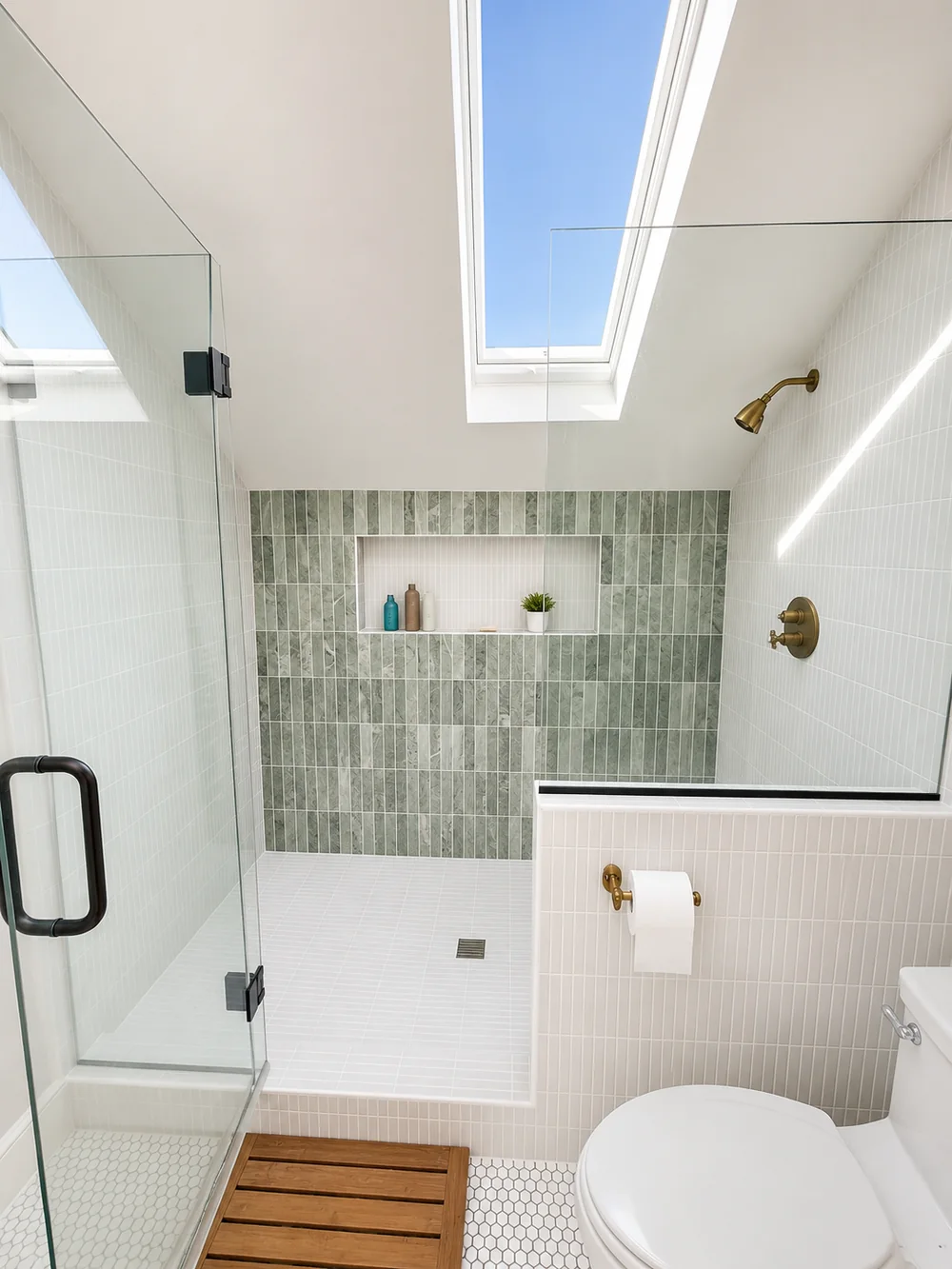
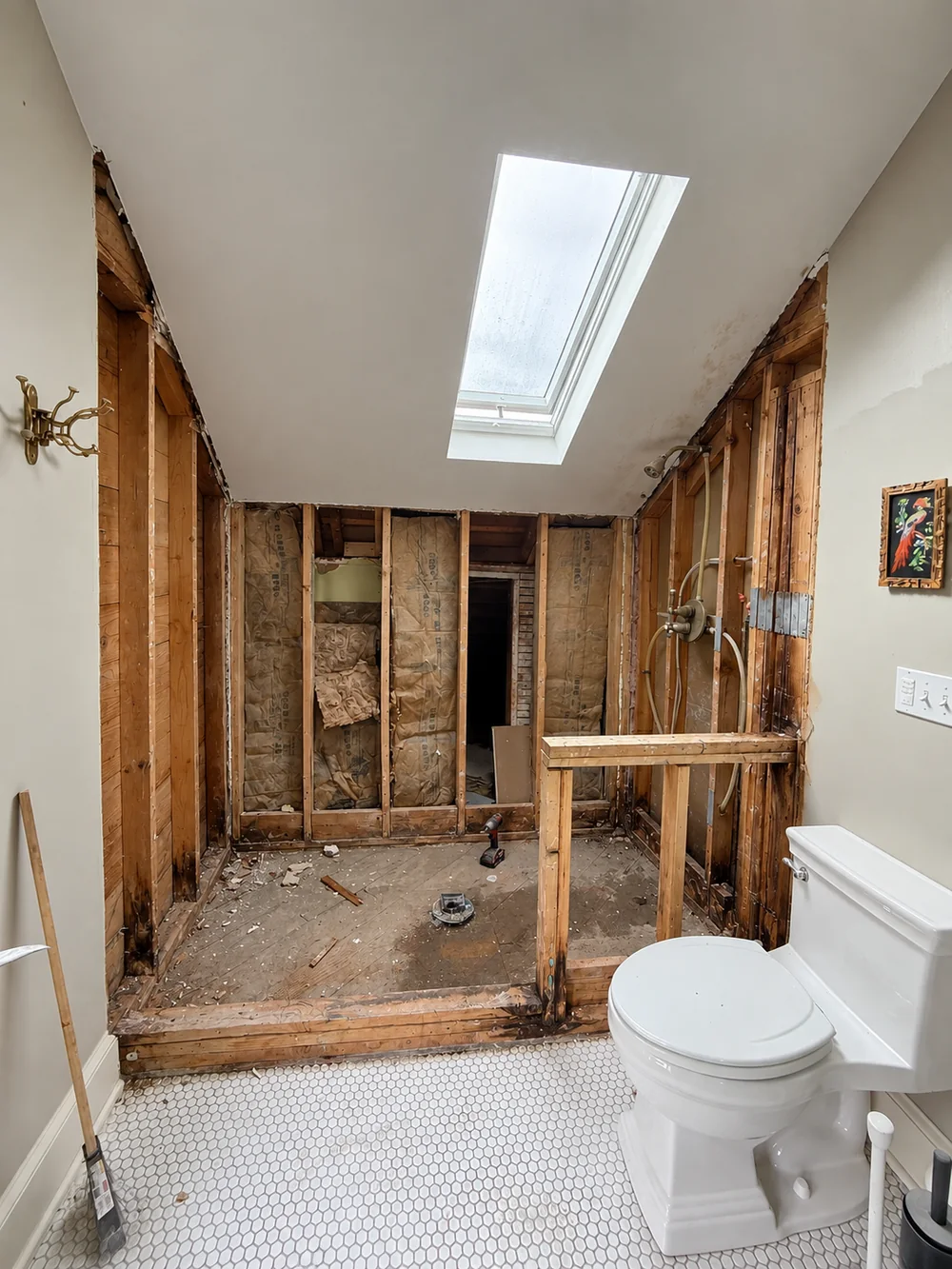 Before After
What you can see is the small part of the problem. Rot travels along the grain under paint and behind siding, so the soft spot you can press with a finger marks where the damage ends, not where it began, and on an older home that gap can run much farther than on a newer one built to tighter standards. Put a dollar figure on a photo and you are really pricing a guess, and that guess becomes a change order the first afternoon the wall comes open.
So someone comes out and gets a hand on it first. We separate what we can confirm standing in front of the wall from what will only show once it is open, and the estimate is written the same way: the confirmed work priced firm, the possible extent on its own line that you approve before a saw ever starts. You always know which number is solid and which one is still a question, because the paper says so plainly.
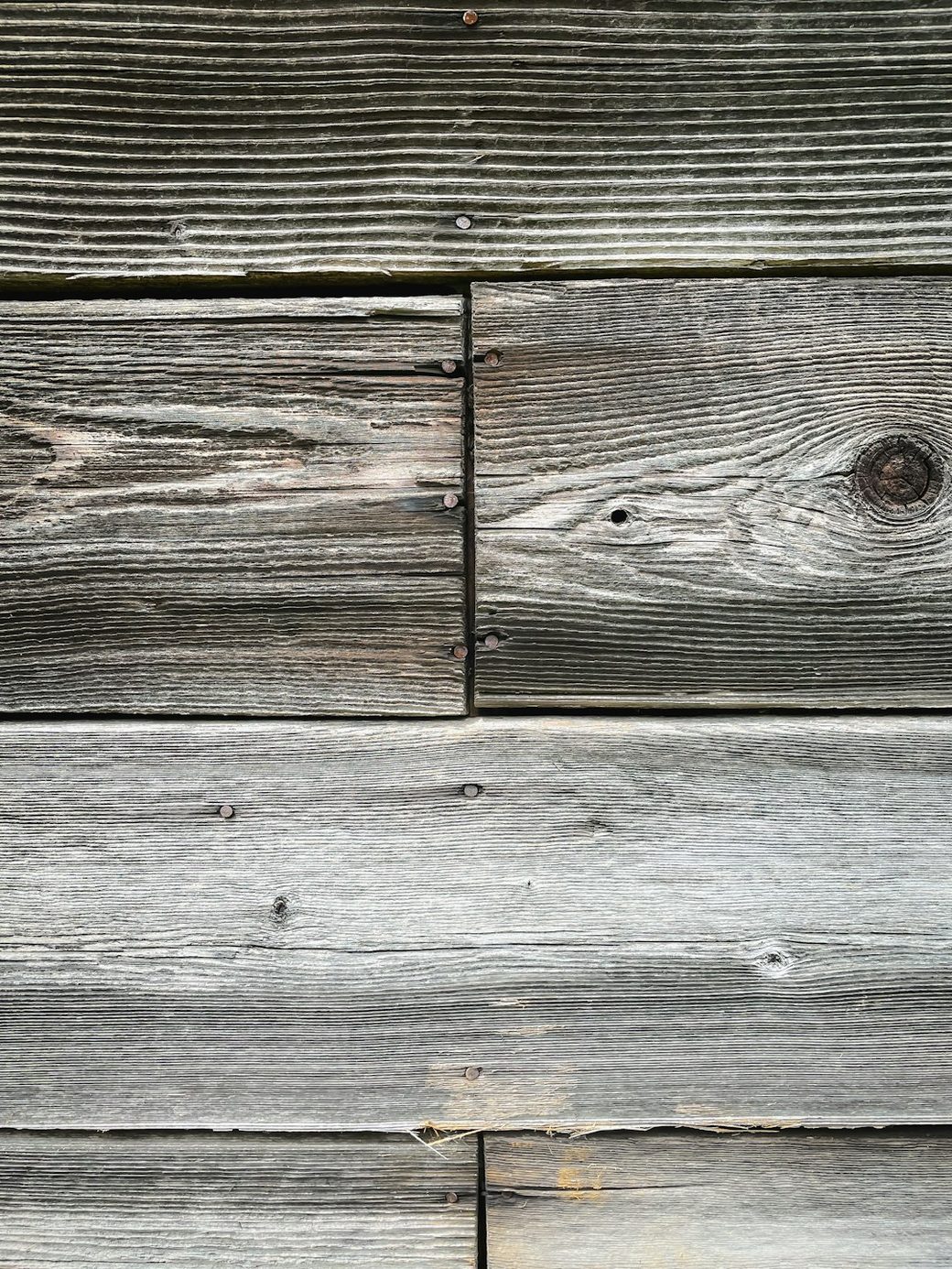
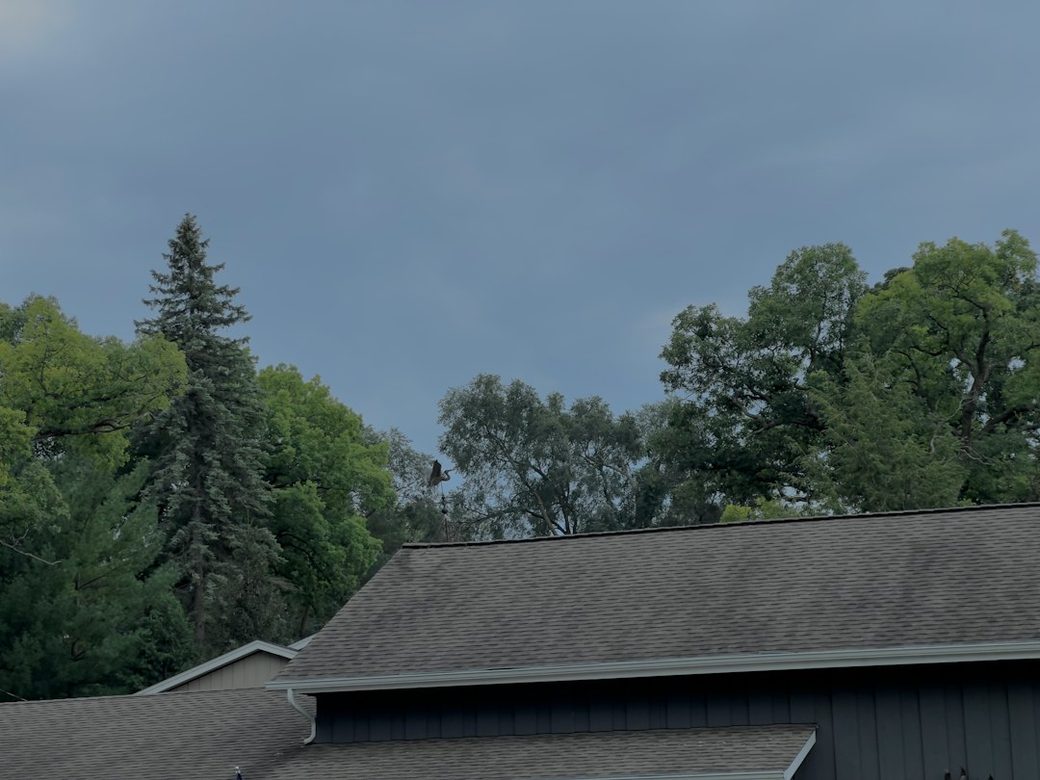
A large lot with mature trees sounds like exactly what you want in Felida, and it usually is, right up until that same shade keeps a north wall from ever fully drying out after a week of rain. On streets where a 1970s ranch sits next to a custom build from the 2010s, the older home’s original trim is the one that has had the most years to feel it.
Anyone with a crowbar can get the rotten wood off the house in an afternoon. What actually protects that corner for the next decade, whether the house behind it went up in the 1970s or five years ago, is which material we choose to put back.
We start by matching whatever is already on the house, because the best repair is the one nobody notices afterward. If a 1970s ranch nearby still has its original cedar trim, cedar goes back in, cut to that same profile. When the exact profile is no longer milled, we build it up from stock lumber until the reveal and the shadow line settle in with the boards on either side of it.
Cedar and redwood earn their reputation from the oil locked into the heartwood, and the sapwood sold in boards today carries far less of that protection than the old-growth lumber it replaces. Primed finger-jointed pine costs the least and takes a brush nicely, but it softens fast anywhere it stays damp, which under Felida’s mature street trees can be most corners of a wall, so we keep it clear of grade and off the low end of any trim run. PVC trim and fiber cement do not rot at all. On a detail that has already failed more than once, the foot of a post, a water table, casing beneath a window that was never flashed above, paying more per foot there means the repair does not come back a third time.
Framing gets its own judgment separate from trim. Anything bearing on concrete or sitting close to grade comes back pressure-treated, since plain fir set against a damp foundation is exactly what let the original sill fail in the first place, on a house from either decade. Where we sister a joist or set a new stud next to older lumber, it is Douglas fir, sized to carry what the old piece was carrying, not just enough to close the gap.
The fasteners matter more than most homeowners realize. Today’s treated lumber is loaded with copper, and copper corrodes an ordinary galvanized screw within a single wet season, so anything going into cedar or treated stock is stainless steel or the hot-dip galvanized kind instead. Skip that detail and the proof shows up fast as dark streaks bleeding down the face of an otherwise new board.
One last habit matters as much as the material itself: every new piece gets primed on every face, including the cut ends, before it ever goes up. Bare end grain soaks up water faster than any painted surface will, and whether that step actually happens says more about how long a repair lasts than whatever is printed on the paint can.
Four questions set the real cost of a rot repair here, and a screwdriver is the only tool you need to settle the first two on your own tonight.
Trim, a water table or the bottom course of siding does not hold anything up, so swapping a bad length there is an afternoon of work and not much more. The math changes completely once a rim joist, a sill plate, a post base or a deck ledger is the thing that failed, because now the house itself is depending on it, and the job picks up shoring, structural-grade lumber, and a permit through Clark County Building Safety on the CC LMS portal before we close anything back up. The board is rarely what costs money here. Getting it out and a new one in without anything settling is what does.
Where does the soft wood actually stop? That is worth testing yourself with a screwdriver, moving it an inch or two at a time until the tip quits sinking in, then continuing a full foot past that point anyway. Rot runs ahead of whatever shows through the paint, and the single biggest reason a repair fails is stopping right at the edge of the visible stain instead of past it.
Is epoxy ever the right call? Occasionally, and we say so when it is. A good filler and consolidant can save a shaped piece that is no longer sold anywhere, a window sash, a porch column, a trim profile specific to an older build, provided the damage sits in a pocket that has not broken all the way through. None of that applies to anything load-bearing, and nobody should use epoxy as a shortcut around opening a wall that actually needs it. A sill plate patched with epoxy instead of lumber is a second repair waiting to happen.
What is actually feeding the leak from above? Answering that is what makes a repair permanent instead of temporary. Water almost never starts where you see it: a roofline with no kickout where it meets a wall, a gutter that spills over its edge in a heavy winter storm, siding set too close to mulch or bark dust, a deck ledger left without flashing lapped over its top edge. Finding that source and correcting it is priced right alongside the wood itself, since new lumber installed under a leak that is still active just means paying for the same repair twice.
Truthfully, the final number rides on how much rot is actually there, and nobody can say for certain until the wall or the deck is open. What we do know going in: a contained job, a short stretch of trim or a handful of soft deck boards, lands on the low end regardless of which decade the house was built. Once joists, sills or post bases are involved the number climbs, because shoring and an inspection travel with any structural work. And the single biggest factor is how many wet seasons the leak has already been running, since the least expensive version of this repair is always the one caught this year instead of three winters from now.
Where the money actually goes tends to surprise people. Material is the smaller line on a rot invoice. Labor and access make up the larger one: setting up a ladder or staging, pulling siding back far enough to reach the damage, holding a load steady while a post gets rebuilt, then closing the wall so no trace is left behind. A short run of bad trim thirty feet up costs more than the same run at eye level, and splitting the work across two separate corners of the house costs more than one larger repair handled in a single pass.
Roughly in order, you are paying for labor first, then the weatherproofing that locks the repair in, meaning flashing, house wrap, siding, primer and paint, then the lumber itself, and last for a permit and inspection on anything structural. Anything that has to come down and go back up gets its own line: a light fixture, a downspout, a section of deck rail, a planter box bolted to a post. All of it is itemized, so what you paid for wood and what you paid for access to the wood are both plain to see.
Already holding a written bid from someone else? Bring it along. On most written estimates we will match the number or beat it by 10%, in writing.
10%
Forward that bid over along with a few photos of what is worrying you, and expect to hear back the same day if it reaches us before 5pm.
A rot repair happens almost entirely on the outside of the house, never inside the rooms your family actually uses, so it stays one of the calmer projects to have scheduled on either a 1970s ranch or a custom build finished last year. Here is roughly how the week tends to unfold.
Before anything comes off, we do a walk-through with you to flag what is being removed and figure out where lumber, staging and the dumpster will sit for the length of the job. A big Felida lot usually makes that simple, since there is open yard to work with instead of a narrow side yard to squeeze equipment into, though a mature tree or a long driveway can still shape where things land. Whatever could be damaged near that wall, you or the crew moves out of the way first.
Expect noise through the morning. Siding and trim come off piece by piece, and the framing underneath is standing in plain view by early afternoon, whichever decade that framing happens to date to. That open stretch is the only thing that actually settles whether the line on your estimate marked as a maybe turns out to be real work or not.
Should what we find once it is open cost more than what we quoted, you hear from us that same day, photos attached, before any further cutting happens. Nothing beyond what you already approved moves forward without you saying go first.
New framing and sheathing go back in, with flashing and house wrap following before the crew leaves for the day, so no opening sits bare through a wet night, whichever decade the house began in. If rain arrives faster than we can close up, the opening gets covered in plastic sheeting and taped at every seam until it passes.
Siding goes back on, trim follows, then sealant and a first coat of primer close out the exterior sequence. At this stage the wall matches its own decade again, whether that means 1970s board and batten or a custom farmhouse profile from ten years ago, and from the street the house simply looks whole.
Last comes a coat of finish paint, then the yard gets cleared completely, and we go through the completed work with you against the estimate, item by item, no matter how old or new the house happens to be. Nothing from the job stays behind afterward: not the cutoffs, not the old rotted boards, not the dumpster itself.
A screwdriver tip settles the question faster than staring at it. Push gently on the spot that worries you: solid wood resists, while rot lets the tip sink in with almost no pressure and often feels damp or spongy under a coat of paint that has already started to blister. That test works the same whether the board in question is part of an original 1970s ranch wall or trim from a custom build finished five years ago. Tell us what you find, send a photo, and reach us before 5pm for an answer that same day.
Only if that board is the entire problem, and on a Felida street where houses date from several different decades, that depends entirely on which one you own. We open the wall enough to find where the soft wood actually ends, then show you exactly how far it runs before we quote anything beyond the piece you pointed at. If the rot stops where it looks like it stops, the job stays small. If it does not, you see photos and a number before we go any further.
You hear from us the same day, with photos, before we make another cut. Everything we quoted up front as a possibility rather than a certainty stays exactly that, a possibility, until you tell us to proceed. This comes up more often on a mixed Felida street than you might expect, since a 1970s ranch and a farmhouse built in 2015 can hide completely different surprises behind what looks like the same kind of siding.
Usually not, since most policies treat wood rot as gradual deterioration rather than a sudden, covered loss, the same way they treat a roof that simply wears out with age. There are exceptions. If the rot traces back to a specific covered event, a burst pipe, a storm that tore off flashing, a documented leak that started recently, your carrier may cover part of it, and we are glad to write up what we find in a way your adjuster can actually use. We cannot promise coverage either way. That call belongs to your insurer.
We do. For anything structural, a rim joist, a sill plate, a post base or a deck ledger, we file through Clark County Building Safety on the CC LMS portal and schedule the inspection ourselves. Cosmetic trim and siding repair that does not touch anything load-bearing typically does not need a permit at all. Either way, you are not the one standing in line at the Public Service Center on Franklin Street.
A contained repair, a run of trim or a handful of deck boards, is usually a two- to three-day job start to finish. Once a rim joist, a sill plate or a post base is involved, plan for closer to a week, since shoring, structural replacement and an inspection all add their own time regardless of whether your house is a 1970s ranch or a custom build finished recently. We give you a specific range once we have actually seen the wall, not before.
Yes, and on a Felida street that often means matching two completely different things within the same week. An original 1970s ranch usually wore plain cedar or basic finger-jointed trim, while a custom farmhouse or craftsman built in the last twenty years may carry a specific composite or PVC profile from a particular manufacturer. We identify which one your house actually has before we order anything, and when an exact profile is no longer sold, we build it up from stock lumber until the reveal and shadow line match what is already there.
It usually makes the job easier. A larger lot gives the crew room to stage lumber, set up a dumpster and keep debris well clear of the house without the tight choreography a narrow in-town lot demands. The one place a big lot can slow things down is simply the walk from the truck to the back of the house, so on a long driveway or a deep bluff-adjacent yard we plan for that extra time rather than let it surprise us partway through the job.
Evergreen’s shop sits at 505 SE 184th Avenue in east Vancouver, and Felida is practically next door, a short run north through residential streets with no river to cross and no real commute to speak of. We cover all of Felida, from the large-lot custom and estate homes along the bluff to the older ranch and split-level streets mixed in around Sunridge, Ashley Heights and the broader Felida-Starcrest area, and we work the rest of unincorporated north Vancouver and Clark County right alongside it. This ground carries a long history too, within a few miles of the Lewis and Clark Expedition’s route and the site of Cathlapotle, a Chinookan town that once held more than a dozen plank houses, long before Felida itself took its name from a postmaster’s cat back in 1890. Permits run through Clark County Building Safety and the CC LMS portal. Washington licensed, WA Lic. #EVERGRS757MC.
Three of the 50 reviews on our Google profile, in the homeowners' own words.
David's work was terrific. Repaired a rotted out structural framing issue in a bathroom and replaced (and resized!) a window in the same space. He initially quoted a two day job but was able to finish in a single day. Dedicated! Will be using him again.
Joe H.Bathroom framing repair
We talked to 4 different contractors and only David, of Evergreen, took the time to climb up to our roof to check out the job. The others gave us bids based upon a photo. Evergreen was not the cheapest but the extent of the work they did was worth every penny.
Steve K.Roof and exterior work
Evergreen crew installed three skylights for us. Once we opened the ceiling there was more to do than expected and they handled it without drama. Clean work, fair price, and they cleaned up after themselves.
Foad M.Three skylights
Send photos and a short description. If it arrives before 5pm you get an answer the same day.
Already have a written estimate from someone else? Send that too. We match or beat most estimates by 10%.
Built for the wet side of the river.

Licensed and insured remodeling contractor serving Vancouver, WA and the Portland metro.
Oregon CCB #262707 · WA Lic. #EVERGRS757MCEvergreen Renewal Services LLC
505 SE 184th Ave Unit 320
Vancouver, WA 98683
© 2026 Evergreen Remodeling. Oregon CCB #262707 · WA Lic. #EVERGRS757MC. Evergreen Renewal Services LLC. All rights reserved.
Same day response on anything sent before 5pm.