

The decade still showing up in every wall
Close to a third of the houses in Gladstone trace back to one narrow stretch of years, the 1970s, when block after block filled in on the flat ground near where the Clackamas meets the Willamette. That means a large share of this city’s original siding, trim and window flashing is reaching the same age within a few years of each other, somewhere past fifty years old, after roughly 43 to 46 inches of rain a year for five decades running. A board rarely fails all at once. It gives out quietly at one corner or one sill until somebody finally presses a thumb into it and feels it move. We trace that spot back to where the water actually got in, and rebuild whatever it has been working on underneath. It is most of what we do in this city, and because so many houses here share a birth year, we often already have a good guess at what we will find before the first panel comes off.
Licensed and insured. Oregon CCB #262707
On anything sent before 5pm
We match or beat most written estimates
Remodels completed
A large share of Gladstone’s homes share the same birth decade, which means a rot call here often turns up the same handful of details regardless of which block it is on. After roughly five decades of Oregon winters landing on that original material, here is where it shows up first, and what we open up most:
Corner boards softening at the base, the casing wrapped around every window and door, water tables, belly bands, and the sheathing hiding behind all of it, these are the pieces that take the first hit from the weather. A Gladstone house from the 1970s wave usually carries plain pine or cedar trim milled on a tight production schedule, stock that was never engineered to survive fifty-plus years of rain without help.
Soft decking, the joists and beams underneath it, and the ledger that ties the whole deck back to the house. A good number of Gladstone’s decks were never part of the original 1970s build. A later owner bolted one on against framing that had already been taking weather for years, and the seam where those two different ages of lumber meet is almost always the first thing to give.
Down low in the crawlspace is where Gladstone’s 1970s framing usually shows its age first, sill plates, rim joists, studs and post bases that have spent decades pulling dampness up out of ground near the rivers’ confluence that never quite drains flat. Vapor barriers and the drainage details standard on a foundation today were not yet routine when this city’s main building wave went in, so moisture simply had an easier path upward.
Flashing above a window or door that quietly stopped doing its job years ago, sending rain in behind the trim with every storm since. Plenty of Gladstone’s original 1970s windows were aluminum sliders set without the head flashing we would install now, so that hidden cavity has had an unhurried, uninterrupted run of Oregon winters to fill.
A supply line or a shower pan that has been seeping quietly for months will soften a subfloor long before a tile cracks or anybody feels it give underfoot. In a house from Gladstone’s main building wave, the plumbing hiding behind that wall is usually the same age as the rest of the house, now closing in on fifty years without ever having been opened.
A couple of photos and a sentence describing what caught your eye is really all we need to start. Messages that land with us before 5pm, from anywhere in Gladstone, get an honest answer the same day, and on the rare occasion the issue belongs to a different trade altogether, we will name that trade rather than take on a job that was never ours to take.
On rot work this is the only proof that means anything. A finished photo shows a wall. A pair shows what was behind it.
Drag the handle. Before the repair, the shower alcove sat open to its water-darkened studs and subfloor. After it, the alcove holds a tiled walk-in shower with a built-in niche and a glass door.
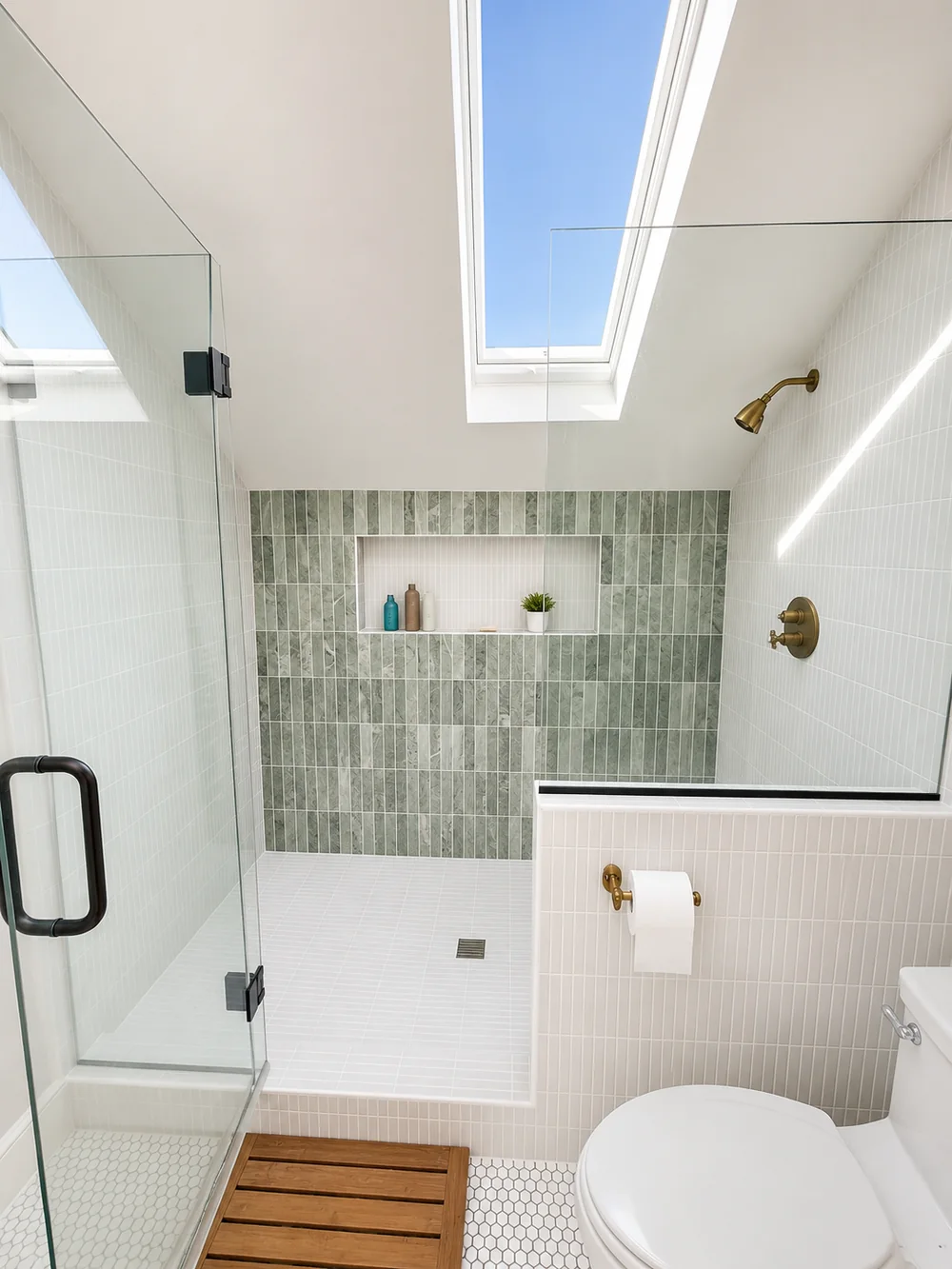
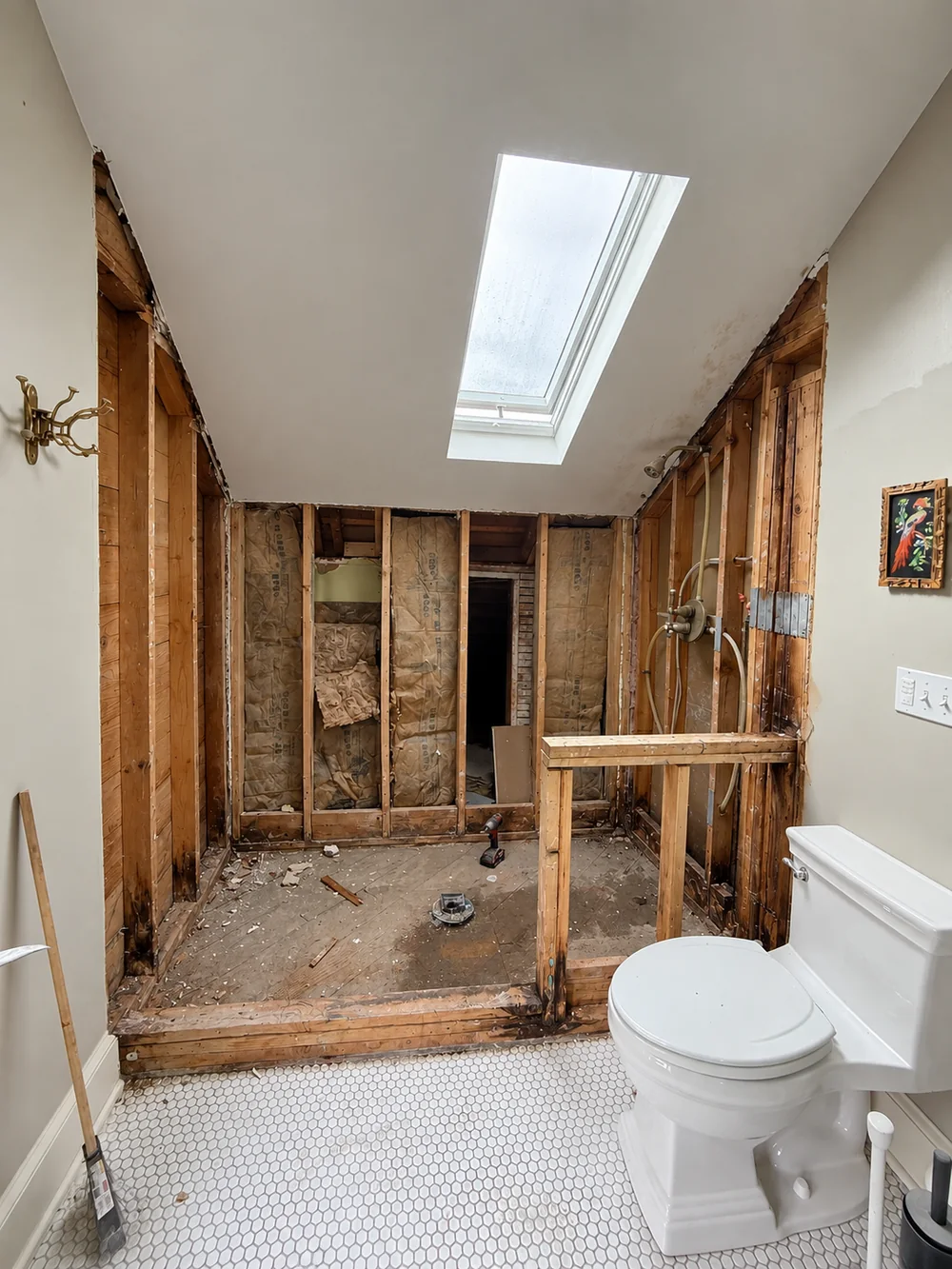 Before After
A soft spot you can reach from the driveway shows where the rot finally ran out of material, not where the leak actually began. Decay spreads through the grain behind paint and siding for months before it ever reaches daylight, and on a block where most of the houses went up within a few years of the same 1970s crew finishing the last one, that hidden stretch tends to run a similar distance on more than one house at a time. Putting a number on a photograph is really putting a number on hope, and hope gets expensive once the wall actually comes open and tells a different story.
So nobody here prices a job sight unseen. A member of the crew stands at the actual wall, confirms what can be confirmed without cutting into anything, and that part of the estimate is written as a firm number. Whatever cannot be known until the siding is off gets its own separate line, marked plainly as a maybe, and nothing on that line gets touched until you have told us to proceed. The page spells out which dollars are certain and which ones are still an open question, so you are never left guessing.
Gladstone’s own history actually runs much older than most of its houses do. From 1894 to 1927, Gladstone Park hosted a summer Chautauqua assembly known as the Mother Chautauqua of the West, drawing speakers like William Jennings Bryan to crowds in the thousands under a dome built to hold 5,000 people. That assembly folded in 1927 and the grounds were sold off a couple of years later, and the neighborhoods that eventually filled in around the park did not really take their current shape until decades afterward, during the building wave of the 1970s that now accounts for close to a third of all homes in the city. That gap matters for rot. A house from that later wave is not old enough to carry a century of patchwork repairs the way an older build might, but it is old enough that materials installed in a single, fast-moving stretch of years are now running out of service life at close to the same time, block after block.
Stripping bad wood off a Gladstone house is the fast half of this job. Choosing what goes back in its place is what decides whether a 1970s corner stays sound for the next twenty years or needs this crew back at the same spot.
What is actually on a Gladstone house from the 1970s wave is rarely solid lumber the whole way around. A good number of these homes went up with plywood panel siding or hardboard trim, both inexpensive choices for a crew building block after block on a tight schedule, and neither one stands up to a seam full of water the way solid cedar does. Where the original panel is still sound but worn, we match its reveal and grooves as closely as a current product line allows. Where it has already failed, we do not put the same vulnerable panel back in its place.
Cedar and redwood resist decay because of oils held deep in the heartwood, and that is still true today, though a house from this era rarely carried much of either material to start with. Primed finger-jointed pine is the budget option now and it still softens fast anywhere it stays wet. Cellular PVC and fiber cement do not rot at all, and at a detail that has already failed once on one of these houses, a water table, a post base, casing under a window with no head flashing, that is what we reach for instead of repeating the original choice.
Framing follows its own rule no matter what the trim turns out to be. Anything resting on concrete or sitting close to grade comes back pressure-treated, since bare fir against a damp 1970s foundation is exactly how the original sill plate gave out. A sistered joist or a new stud is Douglas fir, sized to carry the same load the old piece did, not simply cut to fill the gap.
Hardware deserves more attention than most homeowners give it. The copper in modern treated lumber corrodes an ordinary galvanized screw inside a single season, leaving a rust-colored streak down an otherwise new board, so anything driven into treated stock or cedar on our jobs is stainless or hot-dipped galvanized instead.
Every new piece gets primed on all six faces, cut ends included, before it is ever fastened in place. Bare end grain pulls in water faster than any painted face will, and whether that one step actually happens predicts how long a repair on one of these houses lasts better than anything printed on the paint can.
What a rot repair in Gladstone actually costs comes down to four separate questions, and the first two are easy enough to check on your own. Grab a flashlight, head outside, and press on the wood yourself before anybody quotes you a number.
A board of trim or a water table does not hold anything up, so swapping it out is quick and inexpensive no matter how bad it looks. The moment a sill plate, a rim joist, a post base or a deck ledger is the thing that failed, the stakes change, since the house is actually resting on that piece. Pulling it safely means temporary shoring, framing lumber sized to carry real load, and in Gladstone, a permit filed with the City’s own Building Department rather than Clackamas County, with an inspection to follow. None of that expense comes from the piece itself. It comes from getting a weight-bearing member out of the wall without letting anything above it settle.
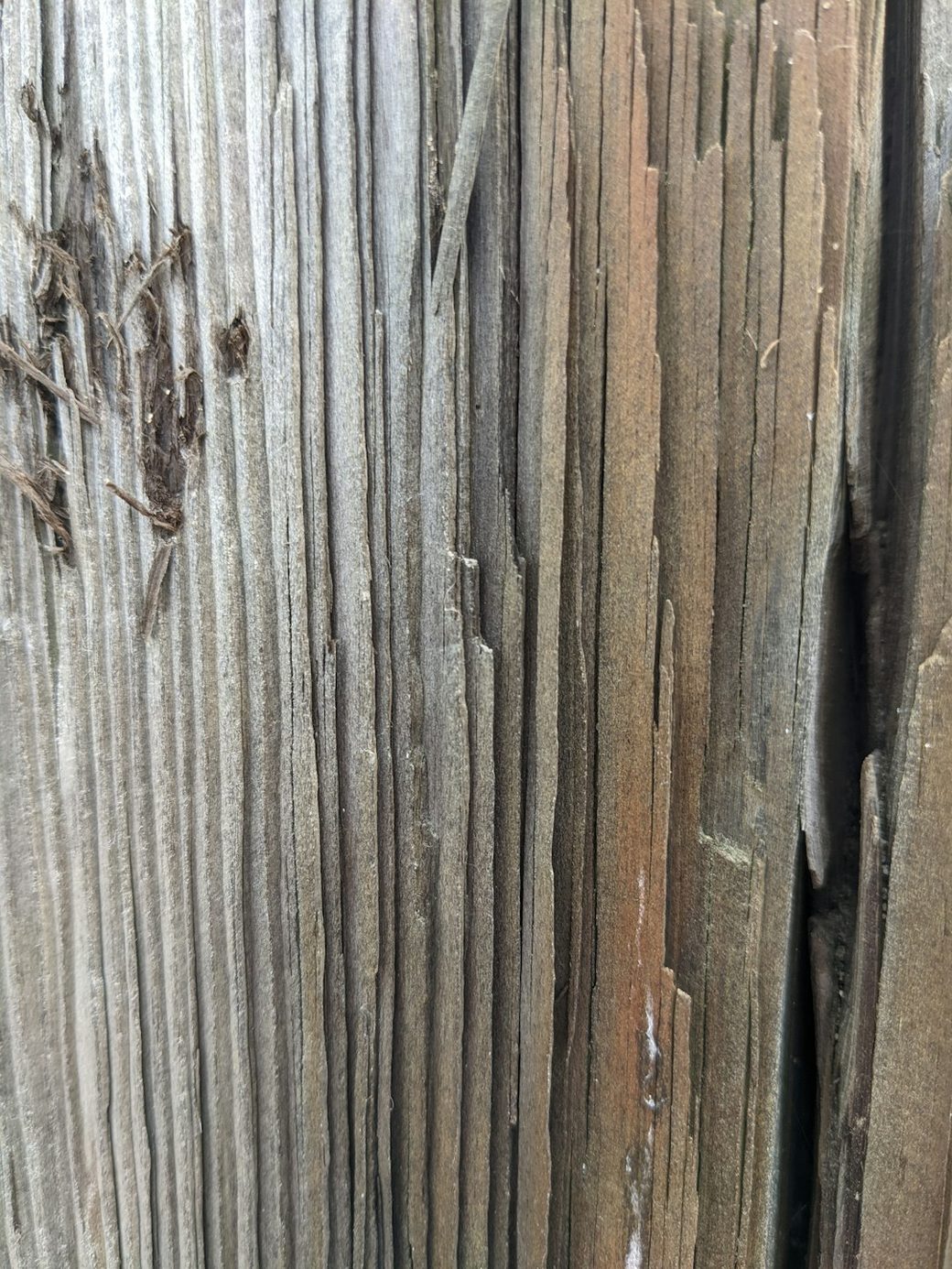
How far does the soft wood actually run? Work a screwdriver along the panel every couple of inches, starting at the obvious trouble spot, until the tip meets real resistance again, then test a further twelve inches past that point anyway. Rot travels inside the material well ahead of anything a stain shows on the surface, and stopping at the edge of the visible damage is the single most common reason a repair here has to be redone.
Does a filler or consolidant ever stand in for actually cutting the wood out? Occasionally, and we will say so plainly when it applies. It can rescue a shaped piece of original trim that nobody mills anymore, provided the damage sits in a contained pocket rather than running clean through the piece. None of that applies to anything load-bearing, and it is never a shortcut around opening a wall that genuinely needs it.
And what is actually feeding it from above? That question decides whether a fix lasts. On a Gladstone house from the main building wave, the usual source is a gutter that has not been cleared in years, a downspout aimed at the foundation instead of away from it, or an original aluminum window that was never flashed above in the first place. We trace that source and shut it off before any new material goes in. Skip that step and the new wood just sits behind the same active leak, which means doing this exact repair again, and paying for it twice.
The honest answer is that price tracks the amount of hidden rot, and nobody, including us, knows that number until the panel or the wall is actually open. A few things hold true before that moment. A contained job, a short run of trim or a handful of soft deck boards, lands cheap no matter which block it sits on. Bring a sill plate, a joist or a post base into it and the figure climbs, since anything load-bearing drags shoring and an inspection along with it. What moves the number more than anything else is simply how many of Gladstone’s wet winters, somewhere around 43 to 46 inches of rain apiece, that leak has already gotten away with running.
Where the money actually goes tends to surprise people. Material is rarely the expensive line on a rot invoice for a house like this. Labor and access make up the larger share, setting up a ladder or staging, pulling a panel of original siding back far enough to see the damage, holding a load on temporary posts while a bad piece comes out, then closing everything so the repair disappears into the rest of the block.
Billed roughly in this order: labor comes first, then the work that seals the repair against weather for good, flashing, house wrap, siding, primer and a finish coat, then the replacement material itself, and a permit fee through the City of Gladstone last, only if the work actually touches structure. Anything that has to come down and go back up along the way, a downspout, a porch light, a stretch of deck rail, gets its own line, so the material share of the bill and the access share both read plainly on the page.
If another company has already handed you a number in writing, bring it along with your photos. We will typically match that figure or come in under it by 10%, and we will put that promise in writing before anything gets scheduled.
10%
Forward that estimate our way along with a photo of the trouble spot. Anything that lands before 5pm gets a straight answer before we close up for the day.
Almost everything about a rot repair happens on the exterior walls themselves, not inside the rooms a Gladstone household actually lives in day to day, so routines barely change while the crew is on site. Here is generally how the week unfolds.
We start with a walkthrough rather than a crowbar. Together we confirm exactly which sections of the house are scheduled to come off, and settle where the dumpster, the staged lumber and the work area will sit for as long as the job runs. Most lots in Gladstone’s 1970s subdivisions leave a crew enough side yard to work with, though a block close to the Trolley Trail can pinch that space down tighter than a newer development would allow. Whatever is fragile or easily damaged near that wall gets carried clear first, before a single tool comes out.
Expect genuine noise through the morning. Siding and trim come off in sections, and by early afternoon whatever is actually behind that original 1970s panel, sound framing or soft, is sitting in plain view for the first time in fifty years. That open wall is the only thing that actually settles whether the possible extent line on your estimate was real.
Should the open wall turn out worse than what we quoted, you hear from us that same afternoon with photos, before we make another cut. Anything we flagged as uncertain on your quote stays untouched until you tell us to proceed.
Fresh lumber and new sheathing close the opening first, and flashing plus house wrap go on top of it before anyone packs up for the night, so nothing sits exposed through a wet Gladstone evening. On the rare afternoon that weather arrives before we finish closing up, the crew tarps the opening down tight and runs tape over every seam, keeping things dry until conditions improve enough to pick back up.
Fresh siding goes up first, trim resets around it, then the crew runs sealant along every seam and brushes on a protective layer of primer before anyone calls it finished for the day. By that point the repair has already blended into a block where most of the houses share the same building year, and the house simply reads as whole again from the street.
Paint is the very last thing to happen. Before the crew leaves for good, we clear away every scrap from the yard, and you and I go over the finished repair side by side, matching what actually happened to what the estimate promised line by line. Nothing from the job gets left behind, not the trimmed-off wood, not the pulled-out rot, not even the dumpster sitting in the driveway.
Press a screwdriver tip, or even a car key, straight into the spot that worries you. Sound wood pushes back against it. Wood that has actually failed lets the tip sink in with almost no resistance and often feels spongy or faintly damp underneath paint that has already started cracking. On a Gladstone house from the 1970s wave, that test reads the same wherever you try it, since most of the original trim on the block came from the same supplier in the same few years. Send a photo along with what you felt when you pressed on it, and anything that reaches us before 5pm gets a real answer that same day.
When that single board genuinely is the entire problem, we say so and stop right there. More often on a Gladstone house from the main 1970s wave, the panel or trim piece you noticed is simply the one spot where the damage happened to surface first, and the same material one stud bay over can be just as compromised without showing it yet. We test around whatever you flag before cutting anything, then tell you exactly what is actually coming off and why, rather than quoting off the single spot you can see from the yard.
It can, and if it does, you find out the same day, not buried in a final invoice. We photograph whatever the open panel actually shows, then call or text you directly, and hold off on any further cutting until you say go. Your original estimate already draws a line between what we priced as certain and what we flagged as a maybe, so nothing beyond that maybe happens without your sign-off first.
Usually not on its own, since most policies file ongoing wood rot under gradual wear and tear rather than a sudden, covered loss, the same bucket an aging roof falls into. That can change if a specific, datable event actually caused it, a burst supply line, a storm that tore flashing loose, something your policy names directly. Either way we are glad to document exactly what we find with photos and measurements as the wall comes open, so you have real evidence if you decide a claim is worth filing. Whether it pays out is a call only your insurer can make.
Yes, separately from Clackamas County, and that distinction matters once a repair turns structural. A sill plate, a rim joist, a post base, or the framing tying a deck back to the house all carry weight, so fixing one means filing with the City of Gladstone’s own Building Department and scheduling an inspector to sign off before the wall closes. This crew handles that paperwork under its Oregon contractor license, CCB #262707, start to finish. A repair limited to trim or siding, nothing load-bearing involved, typically skips the permit process altogether.
It comes down to scope, not the size of the house. A contained repair, a run of trim or a handful of deck boards, typically wraps in a day or two. Bring a sill plate, a rim joist or a post base into the picture and the timeline stretches closer to a week, since shoring, sourcing structural lumber and waiting on a city inspection all take their own time. Oregon’s wetter stretch of the year can add a day here or there if a finish coat needs a real dry window to cure properly. We give you an actual range once we have stood in front of the wall, not before.
Often, yes, though it depends on what is actually on the wall. A lot of these houses were sided in plywood panel siding or hardboard trim rather than solid cedar, so the first step is confirming exactly which product is there before we order anything. Where that original material is still manufactured or can be run to match, we match it directly. Where it has already failed at the same spot more than once, we step up to a product that will not rot a second time, cellular PVC or fiber cement, rather than installing the same vulnerable panel back into the same corner.
A little, though maybe not in the way people expect. Gladstone sits at the meeting point of the Clackamas and the Willamette, and that lower, flatter ground holds humidity a bit longer after a storm than a hillside lot elsewhere in the county would. It is less of a factor than the age of the house itself. A 1970s home here is working against fifty years of ordinary rain far more than it is working against the rivers specifically, so the repair looks the same whether your lot is a few blocks from the confluence or clear on the other side of town.
Evergreen is based out of 505 SE 184th Avenue in east Vancouver, and a job in Gladstone means crossing the Columbia and heading south on I-205 before picking up surface streets through Milwaukie into the ground where the Clackamas meets the Willamette. It is not an unusual trip for this crew, just a longer one than staying on the Washington side of the river. Gladstone itself has run as its own incorporated city since 1911, just under three square miles with a bit over 12,000 residents, and the rot work we take on here spans its neighborhoods, from blocks near the Trolley Trail path to streets closer to Oregon City and the two rivers’ meeting point. Anything structural gets permitted through the City of Gladstone’s own Building Department rather than Clackamas County. Licensed in Oregon, CCB #262707.
Three of the 50 reviews on our Google profile, in the homeowners' own words.
David's work was terrific. Repaired a rotted out structural framing issue in a bathroom and replaced (and resized!) a window in the same space. He initially quoted a two day job but was able to finish in a single day. Dedicated! Will be using him again.
Joe H.Bathroom framing repair
We talked to 4 different contractors and only David, of Evergreen, took the time to climb up to our roof to check out the job. The others gave us bids based upon a photo. Evergreen was not the cheapest but the extent of the work they did was worth every penny.
Steve K.Roof and exterior work
Evergreen crew installed three skylights for us. Once we opened the ceiling there was more to do than expected and they handled it without drama. Clean work, fair price, and they cleaned up after themselves.
Foad M.Three skylights
Send photos and a short description. If it arrives before 5pm you get an answer the same day.
Already have a written estimate from someone else? Send that too. We match or beat most estimates by 10%.
Built for the wet side of the river.

Licensed and insured remodeling contractor serving Vancouver, WA and the Portland metro.
Oregon CCB #262707 · WA Lic. #EVERGRS757MCEvergreen Renewal Services LLC
505 SE 184th Ave Unit 320
Vancouver, WA 98683
© 2026 Evergreen Remodeling. Oregon CCB #262707 · WA Lic. #EVERGRS757MC. Evergreen Renewal Services LLC. All rights reserved.
Same day response on anything sent before 5pm.