

General remodeling in Vancouver, WA
Some projects do not fit in one trade’s box: a basement that needs framing, electrical and drywall; a house being readied for sale; three small jobs that no one contractor wants individually. General remodeling is where those land, run by the same person who quoted them.
Licensed and insured. Oregon CCB #262707 · WA Lic. #EVERGRS757MC
On anything sent before 5pm
We match or beat most written estimates
Remodels completed
The kind of work that lands here
Multi-room projects
A basement finish, a main-floor refresh, a whole-house punch list.
Repair-driven remodels
Fixing the problem first, then making the room better than it was.
Pre-sale work
The list your realtor gave you, done by one contractor on one schedule.
Drywall, trim, doors, flooring and paint, the finish trades that make everything else look intentional
The jobs too small for a big outfit and too involved for a handyman
One living room, before and after
A living room is mostly built-ins, ceiling and light. This is the same corner before the crew started and after they left.
Drag the handle. Left, the room as it was: oak built-ins either side of the fireplace, a textured ceiling, and the marks on it where the new lights would go. Right, the same room finished: the built-ins rebuilt in white with lit niches, and the ceiling done.
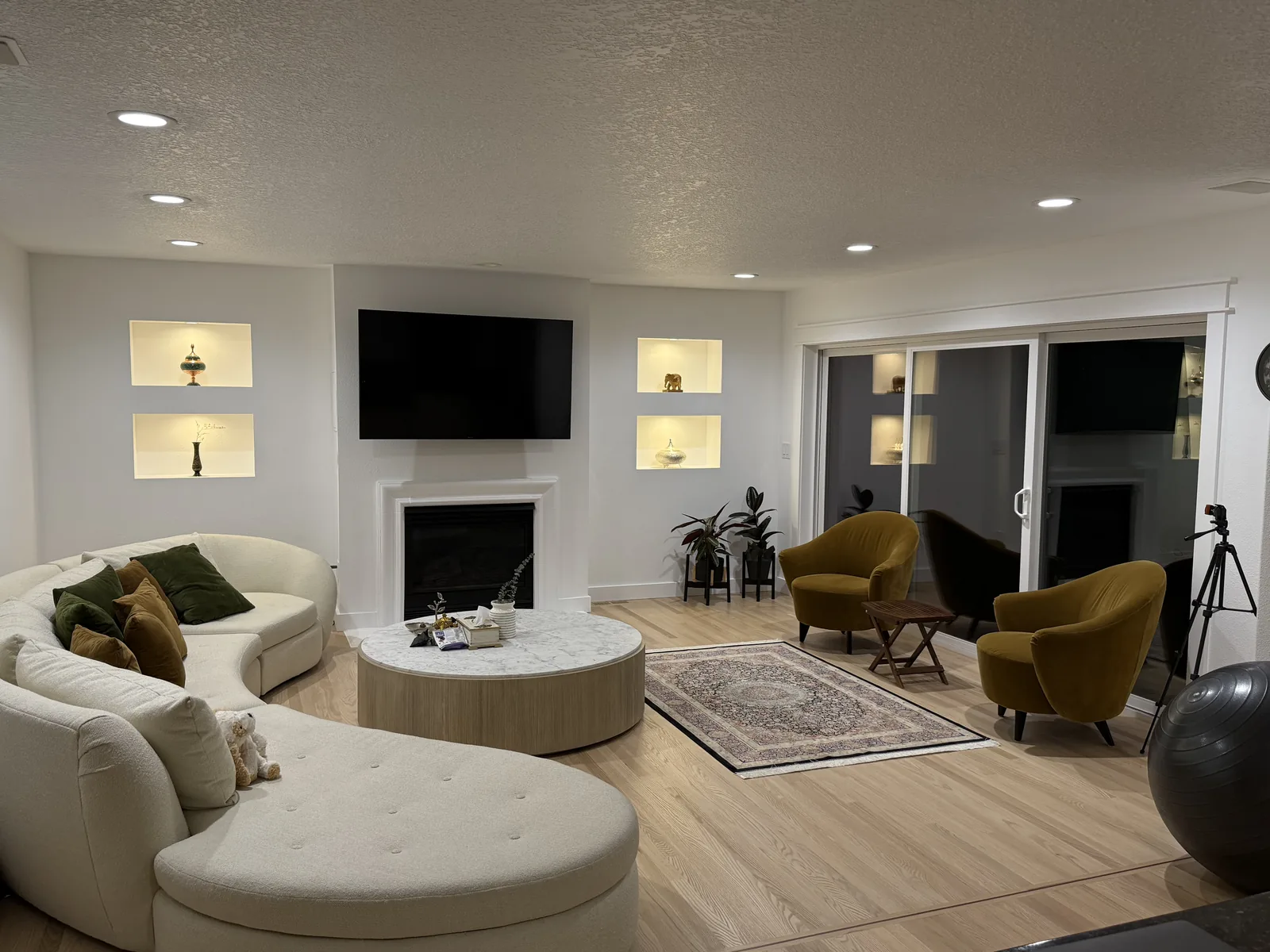
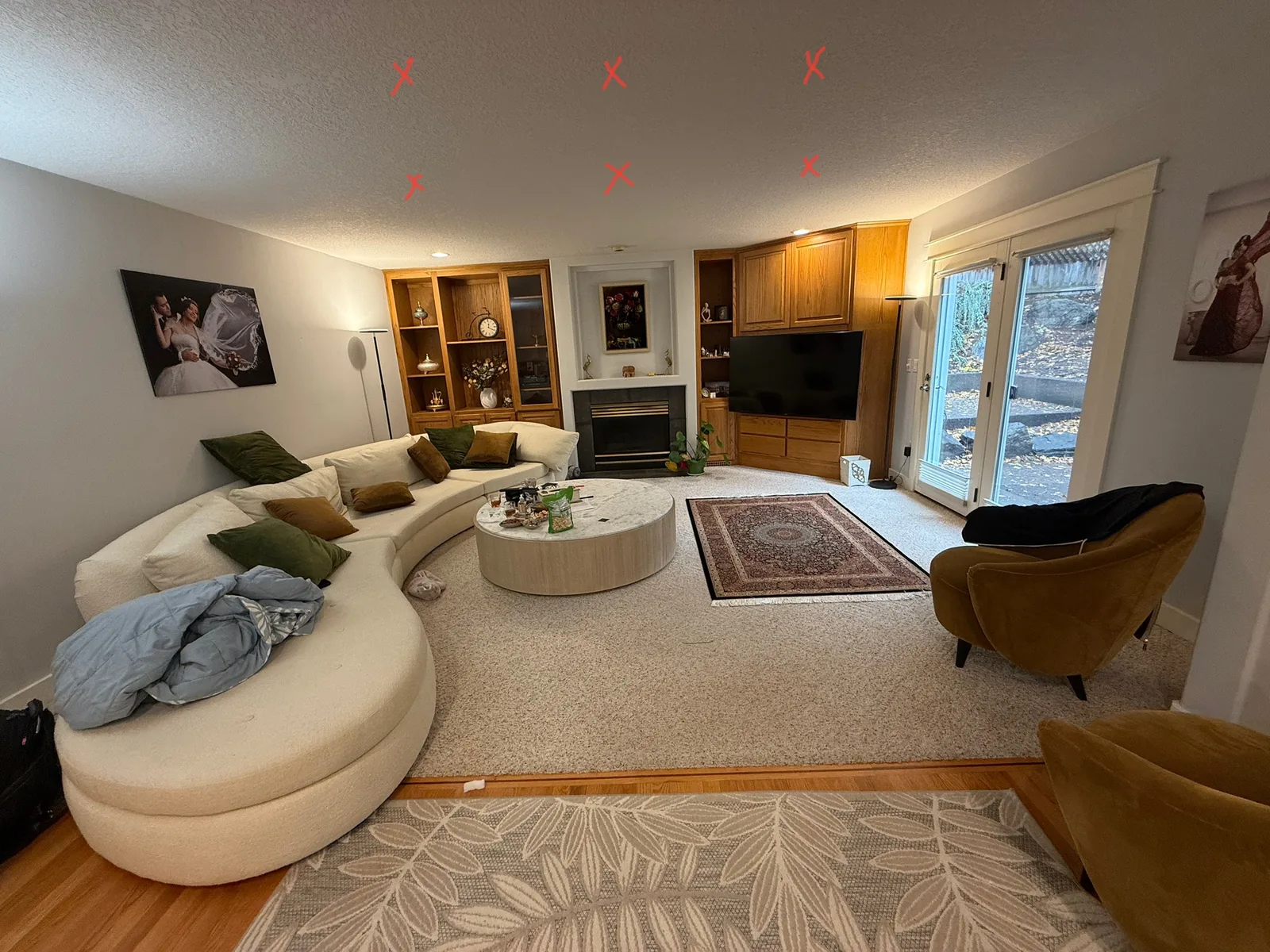 Before After
What owner-led accountability means on a project like this
On a multi-trade project, the thing that usually goes wrong is not any single trade. It is the handoffs: the tile setter waiting on the electrician, the painter arriving before the drywall is sanded, three subcontractors each assuming the other one was told. When the person running the schedule is the person who priced the job and walks the site, those gaps close. That is the entire pitch. David quotes it, David runs it, and you have one phone number for the whole project.
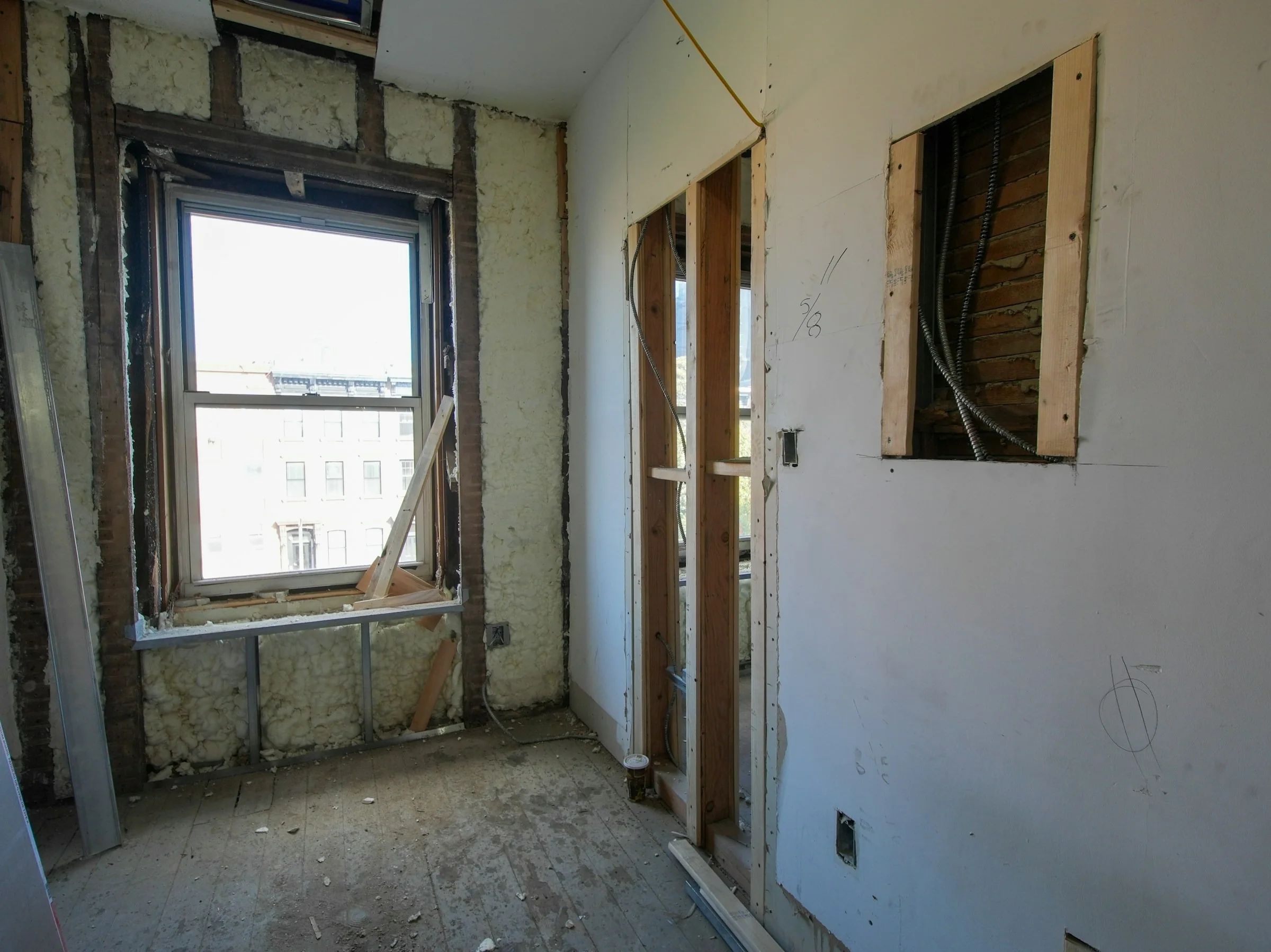
Stripped back to what is soundThe cause gets fixed before anything is finished
The choices that come up on almost every project
Different rooms, the same five decisions. This is roughly how we talk them through on the walk.
Flooring is usually first, because it runs through everything else. Luxury vinyl plank is waterproof, quiet underfoot, cheap to replace a single plank of, and it will never be mistaken for wood up close. Engineered wood is real wood over a stable core, it can be refinished once or twice, and it copes with the humidity swings here better than solid hardwood does. Solid hardwood is the one that lasts generations and the one that will cup if a dishwasher lets go. Tile is the most durable and the coldest. The question we actually ask is how the house gets used: dogs, kids, a basement slab, or none of the above.
Wall finish is the decision nobody expects to have. In an older house you may have plaster over lath rather than drywall, and matching a plaster wall means either a skim coat or a very patient finisher. On new work the thing worth paying for is the level of finish. A level four finish is standard and shows every flaw under raking light; a level five skim coat costs more and is what you want on a long wall facing a window. Paint sheen plays into the same problem. Flat hides, satin wipes clean, and on a wall that catches side light, flat is doing you a favor.
Doors and trim set the age of a house faster than anything else in it. Hollow core doors are cheap and they sound cheap; solid core costs more and makes a room feel finished the moment you close it. On trim, match what the house already has rather than what is on the rack, and if there is nothing worth matching, pick one profile and use it everywhere. Three different trim profiles in one hallway is the tell that a house has been remodeled three times by three people.
Whenever a wall or a ceiling is open, two things are cheap that will never be cheap again. Insulation, especially in a wall backing onto a garage or a room that is always cold. And wiring: a spare circuit, a run for a future fan, a cable to the wall the television is going on, an outlet where you keep plugging in an extension lead. Both cost a fraction now of what they cost as their own job later.
Then the order of the list itself. Anything involving water, structure or the roof goes first, always, because everything after it is finish work and finish work is what gets ruined. Then the trades that make dust. Then the trades that make mess. Then paint. The same scope run in that order costs less than the same scope run in the order the rooms occurred to you, and putting that order on paper is most of what you are hiring us for.
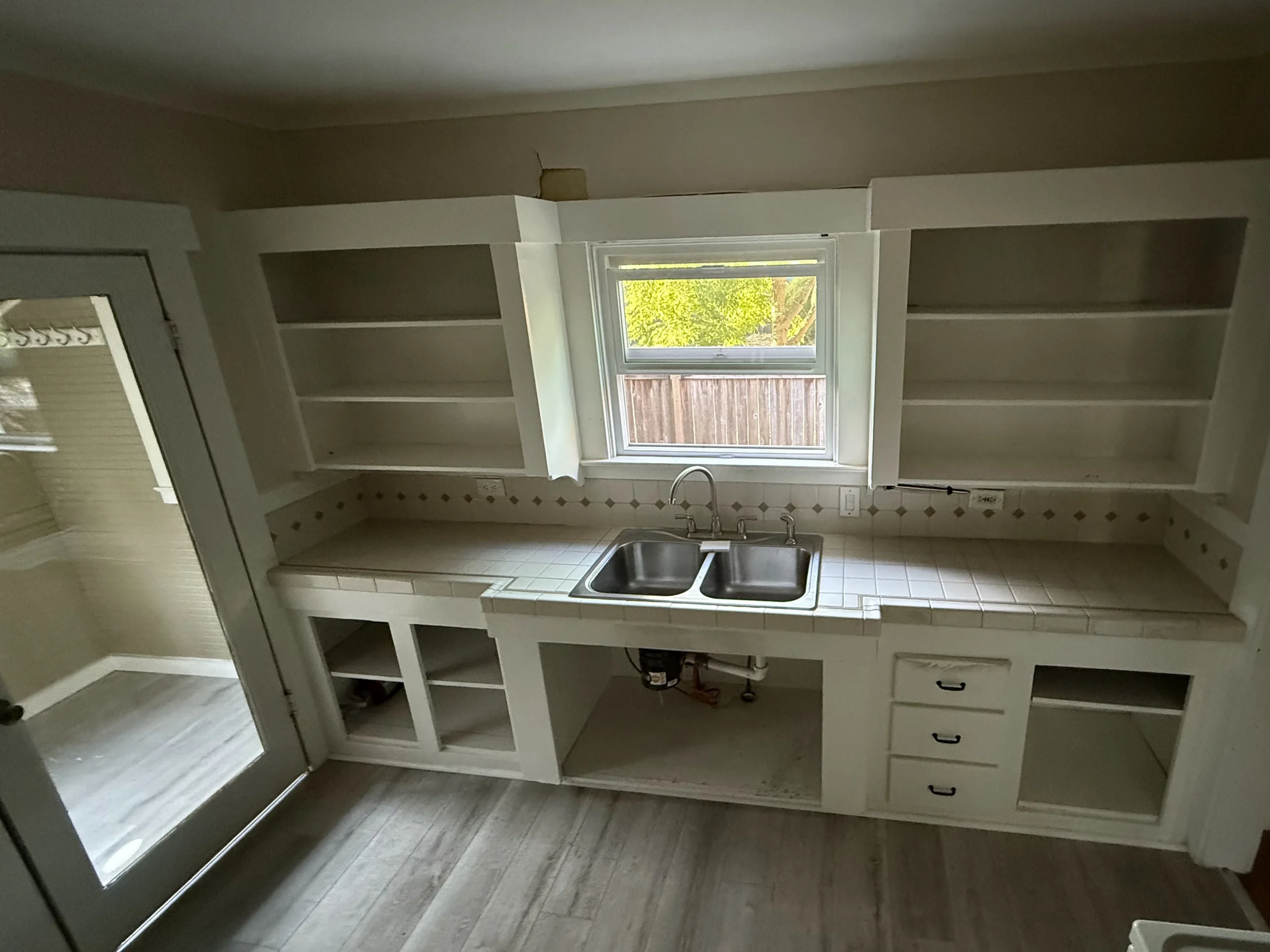
Doors off, plumbing exposedTile counter and backsplash still in place
A kitchen caught in the middle of a list
This photograph is a real job partway through, and it is a fair picture of what general remodeling actually looks like day to day. Every cabinet door is off and the shelves are bare. The sink base is standing open with the drain plumbing in plain view. The tile counter and its diamond accent backsplash are still in place, and the double sink is still under the window.
That combination is the whole point. Nothing here has been torn out for the sake of it. The doors came off because they were being worked on, the base is open because what was under it needed attention, and the counter is still there because the counter is staying. On a project run room by room rather than trade by trade, this is an ordinary Tuesday.
It is also the stage where a list turns into a schedule. With the doors off and the base open you can see exactly what is sound, what needs work and what can be left alone, and that is a conversation worth having with the homeowner standing right there. A good share of the savings on a job like this comes from deciding what not to do.
Fix the cause, then remodel
A surprising number of remodels start as something else: a wall being opened for a new door reveals wet framing; a flooring job finds a soft subfloor. Because structural and rot repair are our specialty, that discovery does not stall your project or bring in a second contractor. It becomes a priced line, you approve it, and the schedule keeps moving. The remodel you wanted sits on top of a repair done properly, which is the only order that lasts.
What it costs
General remodeling is priced by scope, so the estimate is itemized by room and by trade: you see what the drywall costs, what the flooring costs, what the electrical costs. That format also makes it easy to trim, because you can see exactly what removing a line saves. And it makes comparison honest: if you have another contractor’s written quote for the same scope, we match or beat most estimates by 10%.
Where the money goes depends entirely on what is on the list, which is exactly why the estimate is broken out instead of handed over as one number. As a rule of thumb, labor is the majority of almost every line, and the finish trades are more labor heavy than people expect: drywall, trim, doors and paint are nearly all labor and hardly any material. Flooring is the reverse, with material leading. Anything that means opening a wall or a floor sits in a category of its own, because it is labor plus whatever is behind it.
Sequence affects the price as much as the schedule does. Laying flooring before the drywall is finished means laying it twice. Painting before the electrical is signed off means patching and cutting in again. The same list run in the right order is simply cheaper than the same list run out of order, and writing that order down is most of what a general contractor is for.
10%
We match or beat most written estimates
Send it over as-is, rough is fine. Before 5pm means an answer today.
How a multi-room project actually runs
Most of these happen with you still living in the house, so the sequence is built around that. This is the shape of it.
The walk and the list
We go through the whole property with your list, add what we can see, and separate the things that have to happen from the things you would like to happen. Both get priced, separately, so the decision stays yours.
Order and sequence
Anything with a lead time gets ordered first: doors, flooring, fixtures, anything made to size. Then the trades go into an order, and that order is the plan. Water and structure first, dust next, paint last.
Protect and set up
Floors covered, dust walls up where they are needed, a route in and out that is not through the living room, and working hours agreed. If you are staying in the house, we settle which room stays yours and untouched.
The rough work
Framing, plumbing, electrical and anything structural, with inspections where they apply. This is the loud, dusty stretch, and we get it over with in one run rather than coming back to it three times.
The finish trades
Drywall, trim, doors, flooring, tile. Room by room, so the house comes back to you in pieces instead of all at once at the end.
Paint and the punch list
Paint goes on last, then we walk the whole job with you and write the punch list together. We would far rather you found things now than noticed them in a month.
Questions we get on general work
Is my project too small for you?
If it is worth hiring a licensed contractor for, it is not too small. Small jobs done well are where most of our long-term clients started. Send the list, even if it feels short.
Do you use subcontractors?
For licensed specialty trades where the law or the job requires it, yes, working under our schedule and our standard. The management never leaves the company: the person responsible for your project is the owner who quoted it.
Can you work from my realtor's pre-sale list?
Yes, and that list is a good starting document. We walk the property against it, tell you which items actually move value and which do not, and quote the set as one scheduled project.
Can I live in the house during the work?
Almost always. We contain dust, sequence rooms so you keep a working kitchen and bathroom, and agree the daily working hours before we start.
How do you price a project with a long list?
Line by line, by room and by trade, so every item carries its own number. That makes trimming easy, because removing a line has a figure next to it, and it makes comparing a second quote honest, because you can see whether the other one covered the same things or quietly left three of them out.
What if I only want part of the list done now?
That is a normal way to do it and often the smart one. We will tell you which items have to be done together because of the order of the work, and which can wait a year without costing you more later. Anything that lives behind a wall is usually in the first group.
How do you deal with the dust?
Plastic dust walls with zippers at the openings, floor protection along the route in and out, and containment on whichever rooms are actively being worked in. It is not a clean room and nobody honest will promise you one. It is the difference between a house you can live in during the work and one you cannot.
Who do I actually talk to during the job?
The same person who quoted it. There is no account manager, no coordinator and no message being relayed twice. If a trade is on site and something needs deciding, you get called that day rather than finding out about it at the end of the week.
Projects we take on around Vancouver and Portland
The shop is on SE 184th Ave in Vancouver, and most general work sits within twenty miles of it: Vancouver, Hazel Dell, Salmon Creek, Orchards, Felida, Cascade Park, Fishers Landing, Minnehaha, Walnut Grove and Five Corners.
Further out through Clark County we work in Battle Ground, Ridgefield, Brush Prairie, La Center, Camas, Washougal, Yacolt, Hockinson, Sifton and Barberton. Pre-sale lists and basement finishes make up a lot of what comes from out that way, and both are the kind of job where one contractor on one schedule is worth more than the cheapest line-by-line price.
We are licensed in Oregon as well, CCB #262707 · WA Lic. #EVERGRS757MC, so Portland, Gresham, Troutdale, Fairview, Wood Village, Milwaukie, Happy Valley, Lake Oswego, Beaverton, Clackamas, Oregon City and Gladstone all sit inside the same service area. Thirty two towns. If yours is not on the list, ask anyway, because the radius is a guide rather than a rule.
The rest of what we do
What homeowners say
Three of the 50 reviews on our Google profile, in the homeowners' own words.
We had a small but very unique project and this team handled it with a great attitude. They were responsive, on time, and the finished work looks like it was always meant to be there.
Paige T.Small custom project
David the owner came by for a quote and was able to get us scheduled right away. The communication was great with his team and the guys were on time and very professional. Would highly recommend.
Scott G.Kitchen nook bench
We talked to 4 different contractors and only David, of Evergreen, took the time to climb up to our roof to check out the job. The others gave us bids based upon a photo. Evergreen was not the cheapest but the extent of the work they did was worth every penny.
Steve K.Roof and exterior work
Tell us what needs fixing
Send photos and a short description. If it arrives before 5pm you get an answer the same day.
Already have a written estimate from someone else? Send that too. We match or beat most estimates by 10%.
- Call(971) 715-0673
- Emaildavid@evergreenremodeling.co
- Office505 SE 184th Ave Unit 320, Vancouver, WA 98683
- LicenseOregon CCB #262707 · WA Lic. #EVERGRS757MC, licensed in WA and OR